
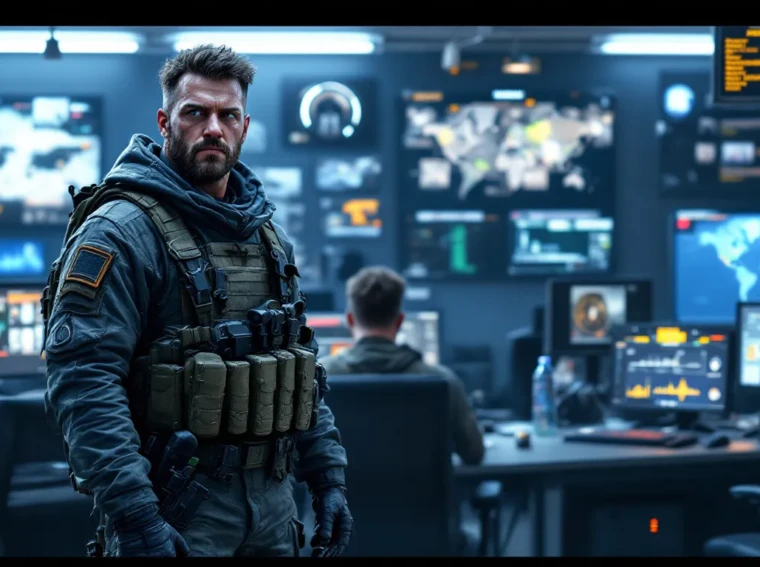
Frank “Woods” Hudson isn’t just another operator in the Call of Duty arsenal, he’s a legacy. From the Cold War campaign to Black Ops 6’s multiplayer battlegrounds, Woods has carved out a reputation as one of the franchise’s most iconic soldiers. Whether you’re hunting him as an adversary or deploying as him in competitive matches, understanding his character history and loadout optimization can give you a serious edge. This guide digs into everything you need to know about Woods: his military background, his evolution across multiple timelines, his current multiplayer presence, and the loadouts that make him a force in 2026.
Key Takeaways
- Woods is a legendary Call of Duty operator with deep military roots in Cold War operations, special forces, and CIA black-site missions that define his tactical expertise and no-nonsense character.
- Black Ops 6 enhances Woods with improved movement animations, optimized ADS transitions, and rebalanced abilities that reward tactical positioning and flanking routes aligned with his special operations background.
- Optimal Woods loadouts pair the XM4 Assault Rifle or LC10 SMG with tactical grenades and killstreaks like Attack Helicopter, requiring attachment tuning and weapon discipline for competitive viability.
- Woods thrives in aggressive mid-range playstyles through prefire techniques, advanced movement mechanics like slide-cancels, and calculated positioning within optimal weapon ranges.
- Woods maintains strong competitive presence across Call of Duty esports, with professional players regularly endorsing his operator selection through tournament performance and documented pro settings.
- Cosmetic variants unlock through seasonal battle pass progression, level-based rewards, and limited-time challenges without requiring premium spending, rewarding dedicated Woods players with natural progression.
Who Is Woods? Character Origins And Role In The Call Of Duty Franchise
Frank Woods’ Background And Military History
Frank Woods is a career U.S. Army soldier with a military pedigree that runs deep. His background centers on special operations, CIA black-site operations, and classified missions during the Cold War era. Woods isn’t a desk jockey, he’s a combat operator with years of field experience, which explains his no-nonsense demeanor and tactical expertise throughout the games.
Woods’ character is anchored in historical authenticity mixed with fictional espionage. His military record includes covert operations in Vietnam, Southeast Asia, and various Cold War flashpoints. What sets him apart from other Call of Duty soldiers is his willingness to operate in morally gray zones, making him a compelling protagonist for narrative-driven campaigns. He’s loyal, aggressive, and uncompromisingly direct, traits that resonate with players who prefer straightforward combat over intricate political maneuvering.
His physical appearance reflects his operational background: scarred, weathered, and unmistakably experienced. The character design itself communicates that this is someone who has survived multiple deployments and lived to tell about it.
Woods Across Different Call Of Duty Games And Timelines
Woods has appeared across multiple Call of Duty timelines, each iteration adding layers to his character. His earliest narrative appearances establish him as a junior soldier working under larger commands, but his progression shows increasing autonomy and leadership responsibility.
In the Black Ops franchise, Woods becomes central to the overarching story of black-site operations and government conspiracy. The games explore his relationships with other soldiers, his moral compromises, and his eventually unwavering loyalty to the mission. Across Black Ops 1, 2, and Cold War, players witness his evolution from soldier to handler and back again.
Black Ops 6 marks a significant shift in how Woods is presented mechanically and narratively. The game introduces updated animations, revised ability interactions, and a reimagined role within the multiplayer ecosystem. His character design respects the legacy while positioning him as relevant in 2026’s competitive landscape.
Woods In Black Ops: The Cold War Era
Campaign Story And Character Development
Woods plays a pivotal role in Black Ops: Cold War’s campaign, serving as the primary protagonist throughout the single-player narrative. The story unfolds across the 1980s, exploring his mission to locate and neutralize the Soviet asset known as “Perseus.” What makes his campaign journey compelling is the psychological depth, Woods grapples with identity, memory, and the consequences of black-site interrogation.
The campaign structure forces Woods into morally complex situations. He’s not fighting for ideological reasons: he’s following orders, questioning authority, and eventually fighting for survival and vindication. His interactions with other characters reveal a soldier who values loyalty above all else, even when that loyalty costs him dearly.
Character development is handled through cutscenes, mission briefings, and in-game dialogue that feels earned rather than forced. Woods doesn’t have a grand character arc in the traditional sense, instead, his journey is about uncovering truth and confronting what he’s been forced to become. This approach feels authentic to the Black Ops universe’s aesthetic of classified operations and hidden agendas.
Key Missions Featuring Woods
Several campaign missions spotlight Woods directly, each revealing different aspects of his capabilities and character. Early missions establish his combat proficiency and tactical awareness, while later missions push him into situations where raw combat skills aren’t enough.
The “Secure the Bag” operation demonstrates his ability to operate independently and make split-second tactical decisions under pressure. The infiltration and extraction sequences show why he’s considered elite-level operator material. These missions also introduce players to Woods’ personality, confident bordering on cocky, but backed by genuine competence.
Missions involving interrogation and extraction highlight the psychological warfare aspects of Cold War espionage. Woods must balance gathering intelligence with maintaining operational security, and these sequences provide narrative texture beyond standard combat encounters. The writers use these moments to explore Woods’ internal conflict and his response to the moral ambiguity of covert operations.
Later campaign missions escalate in complexity and scale. Woods finds himself isolated, operating with limited support, and forced to rely on instinct and training. These sequences are designed to feel personal and desperate rather than part of a larger organized operation, reinforcing his character arc and the campaign’s overall themes.
Woods In Black Ops Cold War Multiplayer And Zombies
Operator Woods And Skin Variants
In Black Ops: Cold War multiplayer, Operator Woods is available as a playable character with multiple cosmetic variants. His base operator skin reflects his campaign appearance, military-grade tactical gear, combat-worn aesthetic, and an overall design that screams experienced operator.
Multiple Woods skin variants have been released through seasonal updates and battle pass rewards. These skins range from period-accurate military uniforms to specialized tactical loadouts, each with unique visual flair while maintaining his core identity. Some variants emphasize his Cold War-era authenticity, while others explore alternate tactical configurations.
Operator selection in multiplayer doesn’t affect gameplay mechanics directly, but selecting Woods carries psychological weight in competitive environments. His visual presence on the map, the confidence his character exudes, and the tactical positioning he suggests, all of this influences how opponents perceive and react to your gameplay. It’s subtle, but competitive players understand that operator selection is part of psychological warfare.
Skins like the “Captured” variant and seasonal cold-weather configurations have been particularly popular in the community. These designs balance aesthetic appeal with practical field appearance, making them viable for both casual and competitive play without sacrificing authenticity.
Woods In Zombies Mode
Woods appears as a playable character in Black Ops: Cold War’s Zombies mode, bringing his campaign personality into the undead scenario. His presence in Zombies adds narrative continuity while allowing players to experience his character in a drastically different gameplay context.
In Zombies, Woods’ dialogue and character interactions take on darker undertones. The writers lean into the horror atmosphere while maintaining his character voice, still direct, still tactical, but now delivering instructions and observations with an edge of grim determination. His lines during zombie encounters feel authentic to both his character and the mode’s atmosphere.
The Zombies integration demonstrates how the Black Ops franchise treats character consistency across game modes. Woods isn’t a separate entity for multiplayer: he’s the same soldier facing different threats. This continuity strengthens the overall narrative experience and makes the universe feel cohesive rather than fragmented into isolated modes.
Playing as Woods in Zombies offers psychological advantages similar to multiplayer. His character’s competence and experience create narrative justification for whatever zombie-slaying success players achieve. Whether that’s mechanical or purely psychological, it affects player performance and satisfaction.
Best Woods-Themed Loadouts And Weapon Recommendations
Assault Rifle And SMG Loadout Builds
For aggressive mid-range playstyles that suit Woods’ character profile, the XM4 Assault Rifle remains a solid foundation. Pair it with attachments that emphasize accuracy and handling: Raider Stock for mobility, 5.56 NATO Magazine for capacity, and Microflex LED for target acquisition. This setup prioritizes consistent damage output with reasonable recoil control, essential for competitive matches where every engagement counts.
Substitute the XM4 with the FFAR 1 if you’re pushing for higher DPS in close-quarters engagements. The FFAR’s fire rate compensates for slightly lower per-shot damage, making it devastating in objective-based modes. Attach the Spetsnaz Grip for horizontal recoil management and the Surge Compensator for vertical stability.
For SMG-focused builds, the Krig 9mm or LC10 dominate current meta in 2026. The LC10 offers superior handling and mobility, critical for operators who thrive in aggressive positioning. Configure it with the **Axial Arms” barrel, **Salvo 25 Rnd Fast Mag”, and **Raider Stock”. This loadout transforms your character into a close-range threat that punishes opponents who overextend or miss initial shots.
Combine your primary weapon with a 1911 Pistol or Magnum secondary for clutch moments. The 1911 provides reliable finishing power without sacrificing primary ammo reserves, while the Magnum offers one-shot potential in tight quarters. Competitive players often choose based on expected engagement distance and team positioning.
Tactical Equipment And Killstreak Setup
Tactical equipment selection dramatically impacts engagement outcomes. Stun Grenades provide crowd control in objective areas like hardpoint or domination flags. The temporary disorientation gives you the window needed to eliminate stunned opponents or secure positioning advantages.
Lethal grenades like the Frag Grenade or Semtex offer area denial and finishing potential. Semtex specifically adheres to surfaces and operators, making it superior for eliminating stationary threats or forcing repositioning.
For Killstreaks, select rewards aligned with aggressive playstyles. The Spy Plane (3 kills) provides crucial map intelligence, enabling your team to exploit opponent positioning. The Napalm Strike (9 kills) creates area denial and forces opponent repositioning, often generating follow-up kills for teammates.
The Attack Helicopter (8 kills) remains one of the most impactful killstreaks available. Its persistent pressure on the map gives your team sustained advantage, and opponents will burn resources eliminating it, resources they can’t spend targeting you. In competitive environments, earning helicopter support shifts momentum decisively.
Build your class by prioritizing Gunfighter Wildcard to maximize attachment slots. This loadout flexibility lets you tune weapons for specific map rotations and opponent playstyles, giving competitive players the versatility that separates average performances from dominant ones.
Woods In Black Ops 6: New Abilities And Gameplay Changes
Updated Character Features And Performance Enhancements
Black Ops 6 introduces revised mechanics for Woods that refine his operator identity. His movement animations are faster and more responsive, reducing animation lag during sprint-to-ADS transitions. This mechanical improvement makes him competitive in higher-tier play where milliseconds determine engagements.
Woods’ operator perk has been rebalanced to emphasize tactical positioning over raw firepower. The updated perk structure rewards players who leverage map geometry and flanking routes, playstyles that suit Woods’ character background in special operations. This design choice aligns mechanical gameplay with narrative characterization, creating cohesion between how Woods feels mechanically and how his character is portrayed.
Equipment accessibility has been streamlined in Black Ops 6. Woods can equip and deploy tacticals faster, creating opportunities for weapon-equipment switching that previous versions made clunky. For competitive players, this translates to more flexible engagement patterns and better response times during chaotic moments.
The visual feedback system has been enhanced, giving players clearer information about hit registration and damage. This doesn’t uniquely favor Woods, but it benefits all operators equally, improving the overall clarity of gunfights and reducing frustration from unclear outcomes.
Campaign And Multiplayer Integration
Black Ops 6’s campaign continues Woods’ story with fresh narrative angles and updated character motivations. The single-player experience explores new dimensions of his personality while respecting established character canon. Campaign missions inform multiplayer operator selection by deepening player connection to Woods’ character arc.
Multiplayer integration is seamless. Cosmetics earned through campaign progression unlock directly in multiplayer, creating incentive to experience both modes. Battle pass systems now feature Woods-exclusive cosmetics that reflect story elements, encouraging engagement across the entire game ecosystem.
Platform availability spans **PC, PS5, Xbox Series X
|
S, and current-generation consoles**, ensuring Woods is accessible to the broadest player base. Cross-progression systems mean time invested in one platform translates to all platforms, reducing switching friction for competitive players who need flexibility.
The integration demonstrates Activision’s commitment to treating campaign and multiplayer as complementary rather than separate experiences. Players investing time in campaign gain mechanical familiarity that transfers directly to competitive play, while multiplayer success motivates curiosity about Woods’ narrative background.
Woods Cosmetics, Bundles, And Unlockables
Operator Skins And Limited-Time Variants
Woods cosmetics have evolved significantly since Cold War’s launch. Recent seasonal updates in 2026 introduce variants that explore different time periods and tactical scenarios. The “Paramilitary” skin emphasizes unconventional warfare aesthetics, while “Operator Tactical” reflects modern special operations equipment standards.
Bundle purchases often pair Woods skins with weapon blueprints that thematically match his character. These blueprints aren’t mechanically superior, they’re cosmetic customizations that apply visual effects to weapons. But, psychological momentum from running character-aligned weapon skins shouldn’t be underestimated in competitive environments.
Limited-time cosmetics rotate through seasonal events and promotional periods. Holiday-themed variants and crossover skins occasionally appear, though these typically clash with Woods’ operational aesthetic. Community feedback generally favors skins that respect his character design rather than absurdist cosmetics that sacrifice cohesion for novelty.
Rarity tiers impact cosmetic pricing. Legendary Woods skins cost more than Rare variants but offer distinctive visual differences including unique animations. Epic-tier cosmetics provide meaningful visual upgrades at more accessible price points, making them popular among casual players seeking character variety without maximum investment.
How To Unlock Woods And Earn Free Cosmetics
Woods is available by default in Black Ops 6’s multiplayer, requiring no unlock progression. But, cosmetic variants require specific unlock methods. Battle pass progression grants free Woods cosmetics through earned tiers, typically at tier 15 and tier 100 of free-track progression.
Premium battle pass subscribers gain exclusive Woods variants at accelerated progression rates. The premium track features at least one unique Woods skin guaranteed within the first 50 tiers, incentivizing premium purchases for players who main the operator.
Seasonal challenges and limited-time events occasionally reward free Woods cosmetics for specific achievement conditions. Recent challenges like “Earn 50 multiplayer eliminations as Woods” or “Win 5 multiplayer matches using Woods” unlock distinctive cosmetics without monetary investment.
Bundle purchases through the in-game store represent the most direct monetization path. Bundled offerings provide Woods skins plus weapon blueprints, often at bundled pricing lower than individual cosmetic costs. Ultimate 10 Call of Duty Strategies frequently incorporates operator selection as part of comprehensive playstyle recommendations.
Level-based rewards unlock cosmetics every 10 prestige levels once you’ve reached endgame progression. Long-term engagement with Woods accumulates cosmetic variety naturally, rewarding dedicated players without forcing premium spending. This progression philosophy balances monetization with player agency, cosmetics enhance enjoyment without becoming pay-to-win mechanics.
Pro Tips For Playing As Woods And Mastering His Playstyle
Aggressive Mid-Range Combat Strategies
Woods thrives when played aggressively but tactically. Push forward on map rotations, secure flanking positions, and maintain initiative in gunfights. His character design encourages operators who make first-contact decisions rather than passive positioning. But aggression without information is suicide, use map knowledge and teammate positioning to exploit opponent vulnerabilities.
ADS sensitivity tuning is crucial. Professional players using ProSettings configurations recommend aiming for 6-8 multiplier sensitivity that balances flick capability with precision. Woods benefits from moderate sensitivity that allows quick target switching without sacrificing tracking consistency during sustained engagements.
Prefire common angles where opponents typically position. Woods’ aggressive nature pairs perfectly with predictive shooting, anticipate where opponents will be rather than reacting after they arrive. This playstyle demands map awareness and pattern recognition, but it generates consistent advantage in competitive settings.
Use Advanced Movement Mechanics effectively. Slide-cancel techniques extend your movement momentum while resetting weapon animations, giving Woods mobility that compensates for lower health compared to heavy armor operators. Bunny-hop over obstacles to maintain speed while minimizing silhouette exposure.
Engage at optimal weapon ranges. Your loadout performs best at specific distances, the XM4 excels at medium range, while SMGs dominate close quarters. Position yourself where your weapon advantages are strongest, forcing opponents into unfavorable engagements.
Team Synergy And Competitive Play Insights
In competitive environments, Woods functions best as a slayer operator, a role focused on securing eliminations and map control. Pair with support operators who enable aggressive positioning through intel or defensive coverage. This role separation maximizes team effectiveness by leveraging each operator’s strengths.
Callout discipline improves team performance dramatically. Communicate enemy positions, equipment placement, and objective status consistently. Woods’ aggressive positioning often generates first-contact information, relay this immediately to teammates so they can capitalize.
Resource conservation matters in competitive play. Each death represents a respawn delay where your team operates at disadvantage. Play calculated aggression, not reckless rushing. Die with purpose, secure objectives, eliminate high-value targets, or create space for teammates.
Weapon discipline prevents ammunition starvation. Use accurate bursts instead of spraying, ensuring your magazine lasts through complete engagements. Reload behind cover rather than in open positions, and manage ammunition reserves across multiple engagements.
Mastering the Gulag in Call of Duty principles apply to 1v1 scenarios in competitive play. Stay composed during isolated engagements, prioritize weapon accuracy, and exploit positioning advantages. Woods’ calm confidence translates to better decision-making under pressure.
Study pro player positioning through tournament broadcasts and content creators. Professional players consistently demonstrate optimal Woods usage patterns, map control sequences, rotation timing, and objective prioritization. Applying these patterns accelerates your competitive development significantly.
Woods Fan Community And Cultural Impact
Why Woods Resonates With The Call Of Duty Community
Woods’ popularity stems from authentic character design. He’s not a superhero or a walking cliché, he’s a competent soldier doing morally complicated work in gray political spaces. This characterization appeals to narrative-focused players who appreciate depth and nuance in game storytelling.
His visual design communicates experience and tactical competence immediately. Unlike operators with elaborate cosmetics or cartoonish aesthetics, Woods presents as a professional soldier. This authenticity creates aspirational identification, players want to be Woods because he represents competence and capability they respect.
Campaign narrative investment generates multiplayer loyalty. Players who complete Cold War’s campaign with Woods as protagonist develop emotional connection to the character. Multiplayer operator selection becomes extension of that investment, making Woods feel personally relevant rather than arbitrarily chosen.
Competitive viability maintains cultural presence. When professional players select Woods for major tournaments, his relevance propagates through the community. Esports visibility drives casual interest, creating cascading effect where competitive endorsement validates operator selection across skill levels.
Content creators regularly feature Woods in guides, tier rankings, and playstyle analysis. Ultimate Guide to Call of Duty Black Ops 3 PC content frequently references Woods as benchmark for assessing other operator viability. This discussion volume maintains cultural presence and generates ongoing community engagement.
Woods In Esports And Competitive Gaming
Professional Call of Duty esports frequently feature Woods in competitive loadouts. His operator selection balances thematic authenticity with mechanical viability, making him attractive to teams that value cohesive presentation alongside performance optimization.
Esports analytics sites like Dexerto regularly analyze Woods’ performance in competitive tournaments. Statistics tracking pick rates, elimination rates, and win percentages across professional matches provide data-driven insights into his competitive viability. Recent analysis shows Woods maintaining solid selection rates even though meta shifts favoring other operators in specific scenarios.
Team identities sometimes incorporate Woods operator selection as brand element. Organizations develop signature Woods loadouts that become recognizable within competitive community. This branding creates spectator familiarity and enhances broadcast presentation through visual consistency.
Tournament success reinforces Woods’ competitive legitimacy. When championship-winning teams select Woods for critical matches, his stock rises significantly. Professional endorsement through performance filters down through competitive ladder, inspiring ladder players to emulate professional configurations and playstyles.
Pro player settings for Woods configuration are extensively documented and updated regularly. Sensitivity, deadzone, attachment combinations, and tactical equipment selections from championship-level players are publicly available and serve as templates for aspiring competitive players. The Loadout features detailed pro player guides that break down Woods loadout specifications and contextual usage recommendations.
Competitive meta evolution occasionally pushes Woods in or out of optimal selection. When patch changes or new weapons shift balance, professional teams quickly adapt their operator selections. Woods’ flexibility allows repositioning within evolving meta, maintaining relevance even when direct nerfs or buffs affect his matchup spread.
Conclusion
Frank Woods represents more than just another multiplayer operator in Call of Duty’s 2026 landscape. He’s a character with genuine narrative weight, mechanical viability, and competitive legitimacy. From his Cold War campaign origins through his continued presence in Black Ops 6, Woods maintains relevance because the franchise treats him as substantial rather than disposable.
Success with Woods demands respect for his aggressive playstyle while maintaining tactical discipline. The loadout recommendations, positioning strategies, and team coordination principles outlined here provide foundation for competitive growth. But mastery comes through consistent practice, studying professional examples, and adapting to evolving meta shifts.
The broader cultural impact shouldn’t be ignored either. Woods’ presence in esports, content creation, and community discussion confirms his status as franchise stalwart. Playing Woods isn’t just mechanical choice, it’s identifying with a character who represents competence, experience, and operational excellence.
Whether you’re casual player exploring character options or competitive player optimizing every configuration detail, Woods rewards investment in understanding his capabilities and playstyle nuances. The frameworks established throughout this guide translate directly to improved performance and more informed operator selection decisions.