
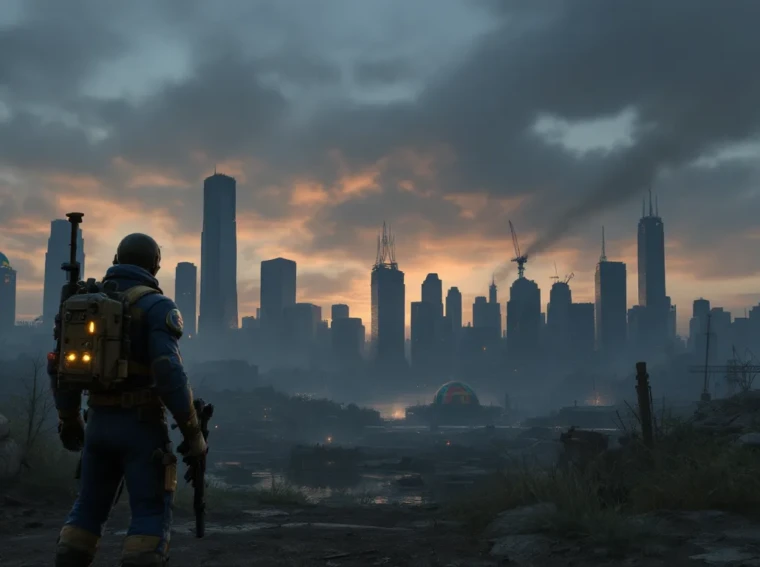
Fallout 4 has been out for a decade, but the Fallout 4 Game of the Year Edition (or GOTY as fans call it) remains one of the most complete package deals in gaming. Whether you’re eyeing the PS4 version, hunting down the standard edition, or deciding between editions, there’s a lot to unpack, literally. We’re talking base game plus all DLC, rolled into one release. The question isn’t whether Fallout 4 is worth your time in 2026: it’s whether the GOTY edition makes sense for you, or if you should grab the standard version and pick and choose. This guide breaks down exactly what you’re getting, how it compares to the standard game, and whether it’s the right call for your vault-dweller journey.
Key Takeaways
- Fallout 4 Game of the Year Edition bundles the base game plus 16 DLC packs, making it the most complete and cost-effective way to experience the full game compared to buying separately.
- New players should buy GOTY edition for the bundled value, while returning veterans only need it if they missed major expansions like Far Harbor and Nuka-World, which offer 20–60 hours of additional content each.
- Console versions run at 1080p 30 FPS in 2026, showing the game’s age, but PC players can leverage mods and graphics enhancements to significantly improve visuals and gameplay quality.
- Essential DLC expansions Far Harbor and Nuka-World provide substantial new areas, factions, and questlines that justify the Fallout 4 GOTY purchase alone for most players.
- Fallout 4’s flexible SPECIAL system and respec mechanics allow multiple viable build strategies—from sneaky snipers to tank builds—giving you freedom to experiment across playthroughs.
What Is Fallout 4 Game of the Year Edition?
The Fallout 4 Game of the Year Edition is Bethesda’s definitive package: the full base game plus all official DLC rolled into a single release. It launched on September 26, 2017, and includes content from the base game’s initial 2015 launch plus every piece of paid DLC released through 2016. Think of it as the “complete edition”, there’s no hunting around for separate add-ons, no Season Pass nonsense, just one purchase that gives you the whole experience.
This edition arrived on every major platform: PC, PS4, and Xbox One. The Fallout 4 game of the year edition PS4 release was particularly significant for console players who wanted everything without the headache of buying DLC separately. Compared to picking up the standard Fallout 4 and then purchasing each DLC individually, the GOTY version bundles everything at a point that made financial sense at launch, and that value proposition holds up even now.
The base game puts you in the shoes of the Sole Survivor, emerging from Vault 111 into a post-apocalyptic Boston (the Commonwealth) 210 years after a nuclear war. You’re searching for your missing son, dealing with rival factions, and trying to rebuild civilization, all while managing radiation, mutant creatures, and the occasional robot uprising. It’s Bethesda’s take on the classic Fallout formula, and it’s massive. The GOTY edition doesn’t change the core game at all: it just adds everything else on top.
Key Differences Between Standard and GOTY Editions
If you’re comparing the standard Fallout 4 to the GOTY version, the main difference is straightforward: DLC. The standard edition is the base game as it shipped in November 2015. The GOTY edition, sometimes called Fallout 4: Game of the Year Edition on storefronts, includes that base game plus 16 official DLC packs.
Now, the standard edition did receive numerous patches and free updates over the years. Both versions get the same engine optimizations, balance tweaks, and performance improvements Bethesda rolled out. So gameplay-wise, you’re not missing anything in the base experience if you buy standard. The gap is purely in the add-on content.
Included DLC Content
The Fallout 4 game of the year edition packs a serious roster of DLC. Here’s what you’re actually getting:
Creation Club content: Contraptions Workshop, Vault-Tec Workshop, Nuka-World, Far Harbor, Automatron, and Wasteland Workshop are the big ones. But that’s just scratching the surface, there are also smaller packs like Settlement Ambush, Dead Orbit Armor, Tunnel Snakes Pack, and Ghillie Suit.
The scale matters here. Far Harbor alone adds 60+ hours of new content with a full new island, faction questline, and tons of exploration. Nuka-World is similar in scope, it’s basically a second major expansion. Automatron lets you build custom robots. The workshop packs expand settlement building in specific directions (Contraptions adds hydraulics and Logic Gates: Vault-Tec lets you build your own vault: Wasteland Workshop brings creatures and traps).
If you bought the standard game at launch and grabbed the Season Pass ($49.99), you’d pay roughly $99.98 total. The GOTY edition, when on sale, often costs $20–40 depending on the platform and retailer. That value proposition is why GOTY editions exist.
Gameplay Enhancements and Updates
Both the standard and GOTY editions have received the same patches since launch. When Bethesda pushed out stability improvements, quest fixes, or balance tweaks, they went out to everyone. The GOTY version doesn’t get special treatment on the patching front, it’s the same game engine, same code base.
What’s different is the content available to you within that engine. If you install GOTY, you immediately have access to settlement building options that ONLY exist in the workshop DLCs. You have new companions (like Ada, who’s unlocked through Automatron). You have new perks, weapons, armor sets, and crafting options tied to specific DLC packs.
That said, neither version has received major balance overhauls or gameplay restructures in recent years. Bethesda moved on to Starfield and then The Elder Scrolls Online updates. Fallout 4 in 2026 plays pretty much exactly like it did in 2018. Your mileage on whether that’s a good or bad thing depends on your taste, but it’s the reality of supporting an aging game.
Complete DLC Breakdown
If you’re weighing whether GOTY is right for you, you need to know what each DLC actually does. Some are essential experiences: others are niche quality-of-life improvements.
Major Expansions
Far Harbor is the heavyweight. Released in May 2016, it adds the Island of Far Harbor northeast of the Commonwealth. This is a full new area with new factions (Children of Atom, the Acadia Synths, the local Colonial Diner crew), a main questline that rivals the base game’s depth, and dozens of side quests. There are new enemies, new power armor pieces, and new weapons. Most players sink 20–60 hours into Far Harbor depending on how thorough they are. Critically, it’s excellent, solid world design, compelling stories, and the atmosphere is genuinely creepy in places.
Nuka-World, released in August 2016, is the spiritual successor to Fallout 3’s Point Lookout expansion. You’re sent to the pre-war Nuka-Cola amusement park, now run by raiders. The content here is massive: you can take over as raider leader and establish raider settlements (a first for the series), fight through multiple zone themes (Galactic Zone, Kiddie Kingdom, Dry Rock Gulch, Safari Adventure, and Imagination Zone), and unlock raider-specific gear. The story is shorter than Far Harbor but thematically darker. Raider players love it: settlement-builders might find it polarizing since the raider aesthetics don’t match the colonist vibe.
Automatron, released in March 2016, lets you build custom robots. You unlock the Automatron workbench and can piece together bots from various parts, different heads, torsos, arms, legs, and weapon configurations. You get a whole questline involving the Mechanist, a villain obsessed with robot armies. It’s fun if you enjoy mechanical solutions: less essential if you prefer human companions or traditional gunplay.
Workshop and Creation Club Content
Contraptions Workshop (April 2016) adds robotic components and complex automation to settlements. Hydraulic frames, Logic Gates, conveyors, pressure plates, basically, it’s for players who want to build Rube Goldberg machines inside their settlements. If settlement building isn’t your jam, skip it. If you love building, this transforms the system.
Vault-Tec Workshop (July 2016) lets you construct your own vault from the ground up. You can build vault rooms, add vault aesthetics, populate it with NPCs, and even run vault experiments. It’s a sandbox mode for vault nerds, and honestly, it’s genuinely fun if you engage with it.
Wasteland Workshop (April 2016) adds capture traps for creatures, so you can trap and tame deathclaws or radroaches and use them in settlements. You also get new settlement decorations and the Wasteland Workshop itself for crafting creature cages. It’s niche but cool if you like the idea of your settlement becoming a zoo of horrors.
The remaining DLC packs are smaller: Settlement Ambush, Dead Orbit Armor, Tunnel Snakes Pack, Ghillie Suit, Harbormen Outfit, Marine Armor Pack, WraithCustoms, Quantum Deathclaw, and Kouo Outfit. These are mostly cosmetics, armor sets, outfits, and weapon skins. They don’t add questlines or mechanics, but they do expand your cosmetic options.
Some of this content is cosmetic enough that you could skip it and barely notice. Far Harbor and Nuka-World, though? Those are experiences. They’re substantial additions to the game that justify the GOTY edition price alone.
Should You Buy Fallout 4 GOTY in 2026?
This is the real question. Fallout 4 has been out for over a decade. The GOTY edition has been out for nearly a decade. Are you late to the party? Sure. Is the party still worth attending? Absolutely, but the answer depends on where you’re coming from.
For New Players
If you’ve never played Fallout 4, the GOTY edition is the obvious choice. You get the complete experience for a single purchase. Modern storefronts often have it priced between $15 and $40 depending on sales. Compare that to buying the standard edition ($30) and then deciding later whether you want Far Harbor ($25) or Nuka-World ($20), you could end up spending more.
More importantly, the GOTY edition lets you jump into Far Harbor without feeling like you’re making piecemeal purchases. The psychological weight of “should I spend another $25” is real: bundling everything removes that friction. You can explore all the content the game offers without a second thought.
The only reason not to buy GOTY as a new player is if you’re certain you’ll never touch DLC. Some players want just the main quest and survival mode. For those players, standard edition is cheaper. But honestly? Far Harbor is so good that most new players end up wanting it anyway. Get GOTY and save yourself the regret.
One caveat: check your platform. The Fallout 4 game of the year edition PS4 version is readily available. PC and Xbox One versions are similarly accessible. Mobile? Fallout 4 isn’t on mobile, so that’s not a concern.
For Returning Veterans
If you played Fallout 4 at launch and burned out on it, should you come back? Here’s the honest answer: not much has changed in terms of core gameplay since 2015. The engine is the same, the mechanics haven’t shifted dramatically, and Bethesda hasn’t overhauled balance or features.
But, mods change everything. If you played on console at launch, mods might feel like a whole new game. IGN’s guides and other major outlets have covered how mods transform Fallout 4, graphics overhauls, quest additions, gameplay rebalancing, new areas. If you’re willing to dig into mods, returning to Fallout 4 in 2026 could feel fresher than you’d expect.
If you played with mods already and just want new official content, Far Harbor and Nuka-World are legitimately worth revisiting if you skipped them. They add substantial playtime. The smaller DLC packs? They’re bonus content, not must-plays.
For veterans, buying GOTY only makes sense if you skipped DLC at launch and want to experience it now. If you already own the standard edition and Far Harbor, you’re not missing much by not buying GOTY, you’ve already got the heavy hitters.
The tl:dr: New players should buy GOTY. Returning veterans should ask themselves: “Do I want Far Harbor and/or Nuka-World?” If yes, GOTY is the efficient purchase. If you already have them, don’t rebuy.
Performance and Technical Considerations
Fallout 4 was built on the Creation Engine, which is over a decade old now (it’s based on Gamebryo, which is even older). In 2026, you need to understand what that means for performance on your platform of choice.
PC Requirements and Mods
On PC, the base game’s minimum specs are ancient: Windows 7/8/10 64-bit, Intel Core i5-680 or equivalent, 8 GB RAM, NVIDIA GTX 590 or equivalent. In reality, these specs are outdated. Modern hardware runs Fallout 4 at high/ultra settings at 1440p or 4K without breaking a sweat. A mid-range GPU from the last 3 years handles it easily.
Where things get interesting is mods. The vanilla game supports the Creation Kit for modding, but most players use Metacritic-ranked sources and community hubs like Nexus Mods to find enhancements. Graphics overhauls (like ENB presets or shader packs) can tank performance if you’re not careful. A heavily modded Fallout 4 on an older PC might drop to 40–60 FPS even at 1080p low settings. A modern PC? You can run 200+ mods at 60+ FPS at high settings, easy.
The GOTY edition on PC is identical to standard: mods work on both equally. If you’re a PC player, buy whichever version is cheaper, then sink your time into mods. That’s where the real value lives on PC in 2026.
Console Performance
PS4 and Xbox One run Fallout 4 at 1080p 30 FPS with occasional dips into the 20s during intense firefights or settlement building. That was acceptable in 2015: by 2026 standards, it’s noticeable. The game doesn’t have a 60 FPS mode on base PS4 or Xbox One, Bethesda never pushed a next-gen patch for PS5 or Xbox Series X, which is frankly baffling given Starfield got the full treatment.
The upshot: console players don’t have performance headroom like PC does. What you see on the box is what you get. The Fallout 4 game of the year edition PS4 version plays identically to the standard edition on the same hardware. No optimization differences between versions.
If you’re on PS5 or Xbox Series X, Fallout 4 runs via backward compatibility at the same specs: still 1080p 30 FPS. It’s not a problem if you’re used to it, but if you’re jumping from something like Starfield or a newer AAA title, you’ll notice the framerate. Mods aren’t available on console for Fallout 4 (Creation Club items exist, but they’re not the same as full mods), so you can’t push it further.
The technical reality: Fallout 4 in 2026 shows its age on console. That’s not a dealbreaker if you care about the content, but it’s worth knowing before you commit.
Tips for Getting the Most Out of Fallout 4 GOTY
If you’re diving into Fallout 4 GOTY in 2026, here are concrete tactics to maximize your experience.
Essential Mods and Enhancements
Graphics Mods: Even on console (if you have Creation Club access), basic visual enhancements are worth considering. On PC, texture packs are non-negotiable, the vanilla textures are low-res by modern standards. ENB presets like Vivid Weathers or variations of Clarity/Photoreal completely transform the game’s visual tone.
Quality of Life Mods: If you’re on PC, grab these immediately:
- Faster Terminal Displays – removes unnecessary animation delays when hacking terminals.
- VATS Script Tweaks – makes the combat system feel more responsive.
- Armorsmith Extended – lets you craft and modify armor in ways the base game doesn’t allow.
- Orzotta Armors – high-quality custom armor sets that don’t clash with vanilla aesthetics.
These aren’t “game-breaking” mods: they’re convenience upgrades that address vanilla annoyances.
Rebalancing Mods: Game Informer’s reviews have noted that Fallout 4’s loot and enemy scaling can feel off. Mods like Legendary Modification (lets you make any legendary weapon) or Better Legendary Drops improve gear progression without trivializing the game.
On console, you’re stuck with Creation Club items, which are limited. Prioritize the survival mode enhancements if available.
Optimal Build Strategies
Fallout 4’s SPECIAL system has 7 attributes: Strength, Perception, Endurance, Charisma, Intelligence, Agility, Luck. Here’s what works in 2026:
The Combat Veteran Build: 5 Perception (for better weapon accuracy), 5 Agility (for critical hit frequency in VATS), 5 Luck (for damage and crit multipliers). This gives you high DPS in VATS and ADS. Dump points into relevant perks: Rifleman, Gunslinger, or Heavy Weapons depending on your weapon choice. Aim for at least 1 point in Endurance for survivability, getting 1-shot by a deathclaw is never fun.
The Tank Build: Max Endurance (10), grab Toughness and Iron Clad perks for damage reduction. Heavy Armor or Power Armor + high HP pool = you can face-tank radroach swarms. Pair it with 3-4 Strength for heavy weapon damage. Less flashy than DPS builds, but effective for survival mode.
The Sneaky Sniper Build: 5 Perception, 5 Agility, grab Sneak, Deadeye, and Ninja perks. Silenced weapons deal 3x (or 9x) damage when sneaking. This build trivializes most encounters, you can one-shot entire rooms. Fair warning: once you go sneaky sniper, going back feels slow.
The Charisma/Settlement Build: If you’re into settlement building and companion relationships, 6+ Charisma unlocks local leader perks (connecting settlements), cap collector (more shop resources), and better prices. Pair it with high Intelligence for crafting bonuses. This is more sandbox roleplay than combat-focused, but it’s legitimate.
The real tip here: don’t feel locked into one path. Fallout 4 lets you respec at any time without penalty (via console command on PC or by modding your stats on console). Experiment. Try a sniper build for one playthrough, then go full tank the next. The game supports it.
Conclusion
The Fallout 4 Game of the Year Edition in 2026 is what it’s always been: a complete, feature-rich package that bundles over 100 hours of content into one purchase. For new players, it’s the obvious starting point. For veterans, it’s a chance to experience Far Harbor and Nuka-World if you missed them, or to dive back in with mods and new build strategies.
The game shows its age technically, 30 FPS on console, aging engine design, but the world-building, quest design, and sheer volume of content hold up. Whether you’re rebuilding the Commonwealth, roleplaying as a raider overlord in Nuka-World, or obsessing over settlement aesthetics, there’s something here for different playstyles.
Grab it on sale (GOTY frequently drops to $20–30), invest in mods if you’re on PC, and expect to lose weeks to this game. Ten years later, Fallout 4 still delivers.