
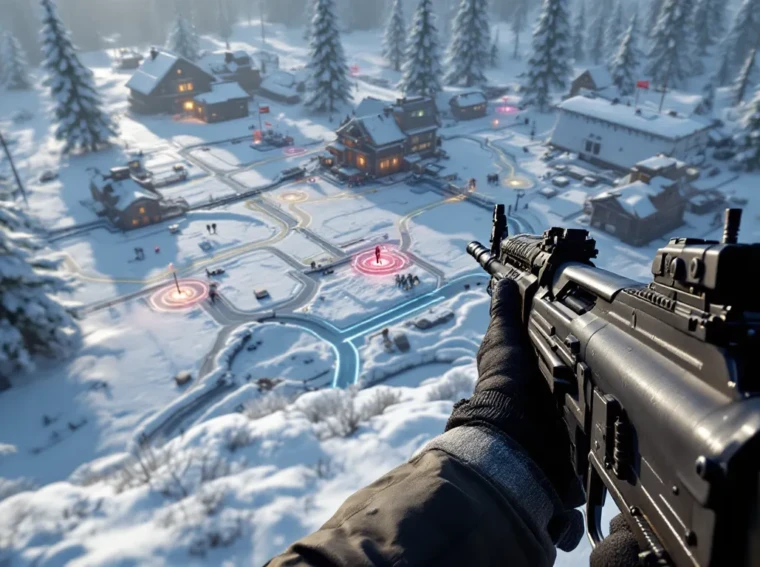
Call of Duty WW2’s map design stands out even years after launch, each arena was built with specific gameplay intentions, from corridor-choked close-quarters to sprawling objective-heavy battlegrounds. Whether you’re running Search and Destroy on USS Texas or coordinating team pushes in War Mode, understanding map flow, sightlines, and spawns separates players who consistently perform from those who stumble into gunfights unprepared. This guide breaks down every multiplayer map, War Mode exclusive arena, and the tactical considerations that matter: chokepoints, power positions, flanking routes, and how to adapt your loadout based on the environment. By the end, you’ll navigate with purpose instead of guessing.
Key Takeaways
- Call of Duty WW2 maps are divided into core multiplayer arenas and War Mode exclusive zones, each requiring distinct strategies based on size, spawns, and objective flow.
- Small maps like USS Texas and Aachen demand close-quarters loadouts (shotguns, SMGs) and spawn control, while large maps like Ardennes Forest reward long-range weapons (snipers, ARs) and positioning discipline.
- Understanding map call-outs, high-traffic routes, power positions, and flanking paths is the foundation of competitive play—knowledge of Call of Duty WW2 maps directly separates consistent performers from casual players.
- War Mode success depends on resource management and objective prioritization: attackers must coordinate planting while minimizing deaths, and defenders must intercept objectives from off-angle positions rather than defending directly.
- Balanced team composition (rushers, mid-range players, snipers, support) combined with intentional practice on one small, medium, and large map compounds skill faster than grinding aim alone.
Understanding the Map Pool and Game Modes
Core Multiplayer Maps vs. War Mode Exclusive Arenas
Call of Duty WW2 ships with two distinct map types. Core multiplayer maps, think USS Texas, Pointe du Hoc, Ardennes Forest, rotate through Team Deathmatch, Domination, Search and Destroy, and Hardpoint. These maps are designed for symmetrical or semi-symmetrical balance, with clear objective positioning in modes like Domination (three flags) and S&D (bomb sites).
War Mode maps are entirely different beasts. Breakout, Invasion, and Operation Rescue flow like mini-campaigns, with defenders pushing against attackers through linear or semi-linear objectives. They don’t have respawn timers in the traditional sense: instead, players earn tickets based on objective progression. Understanding which map type you’re playing is crucial because loadout choices, positioning strategies, and even ping timing play differently across them.
Map Size and Player Count Considerations
Map size dictates gameplay pace and weapon viability. Small maps (USS Texas, Aachen) support 6v6 or 8v8 play with tighter engagement distances, rarely beyond 40 meters. Medium maps (Carentan, Pointe du Hoc) work well at 8v8 with mixed-range encounters. Large maps (Ardennes Forest, Flak Tower) shine at 12v12 or War Mode’s team structure, where long sightlines and positioning matter as much as aim.
Smaller player counts on larger maps create dead zones and spawn issues. Conversely, too many players on small maps becomes chaotic, reducing strategic depth. WW2’s matchmaking generally pairs the right player count to map size, but squad composition and game mode affect optimal placement. A 1v1 on a large map feels empty: 8v8 feels appropriately challenging.
Small Maps: Fast-Paced, Close-Quarters Combat
USS Texas and Aachen Strategic Breakdowns
USS Texas is a claustrophobic nightmare, literally a battleship with tight corridors, narrow stairwells, and close spawns. Engagement distances rarely exceed 25 meters. Wall weapons like the Combat Shotgun and Sawed-Off Shotgun dominate, along with the GPMG-7 and STG44 in tight quarters. Grenades and explosives are absurdly valuable here: a single frag grenade bounced into a corridor can clear two or three enemies. Sound cues matter: footsteps echo loudly, so dead silence or awareness of enemy positioning is critical.
For Team Deathmatch on USS Texas, spawns cluster around three main zones: top deck, mid-ship corridors, and engine room. Learning these spawns prevents you from getting flanked as soon as you respawn. The veteran play is maintaining spawn control, after securing an area, hold nearby chokepoints to spawn-trap aggressive opponents.
Aachen is a tight urban arena set in a German town. Unlike USS Texas’s vertical nature, Aachen has streets, alleyways, and multi-story buildings. Engagements happen at 15-35 meters, making it SMG-friendly (GPMG-7, Type-100, MP40). Vertical play is significant here, defenders in second-story windows pin down attackers below. Corner abuse and pre-aiming doorways are non-negotiable. The center marketplace is a crossfire zone: avoid it until you have map control or teammates providing support.
Domination and Search and Destroy Tactics
Domination on small maps focuses on two-flag control rather than holding all three. On USS Texas, Flag A (top deck) and Flag B (engine room) are easier to secure than Flag C (mid-ship corridor). The squad that controls the mid-corridor controls the map. Plant one player watching the corridor from a safe angle while two teammates cap flags. Flag C is so contested that fighting for it often results in wasted time: let the enemy push it while you’re holding A and B with numbers advantage.
Search and Destroy on small maps is where clutch moments happen. On Aachen, Bomb Site A (Market Square) has two entry points and limited cover. Site B (Town Hall) is more defensible due to interior structures. Attackers should commit to one site with focused firepower rather than splitting and getting overwhelmed. Defenders can’t afford to stay at one site without info, rotate when pressure builds elsewhere. The 1911 Pistol is viable in S&D after losing your primary: many players buy Pistol-only in late rounds on small maps because ammunition is scarce and every kill matters.
Medium Maps: Balanced Gameplay and Versatility
Pointe du Hoc, Carentan, and Visceral Engagements
Pointe du Hoc is a clifftop fortification map with ruins, trenches, and two main flanks. Engagements span 25-50 meters across most of the map. The bunker complex in the center provides cover and multiple entry points, creating interesting close-quarters moments within a medium-sized space. High ground (the cliff overlooking the beach) is contested early on: securing it grants vision control. The assault rifle STG44 and the Kar98k sniper compete well here. Teams that control the bunker and its entrances dictate spawn pressure on the beach side.
Carentan is a village built for flowing gameplay. Streets encourage mid-range engagements (30-45 meters), while buildings offer close-quarters routes. The beauty of Carentan is that the map has no true “power position”, control shifts based on team movement. Flanking routes through alleys are abundant, so rigid positioning gets punished. The Grease Gun SMG dominates close interior routes, while the STG44 AR handles streets well. Coordinated teams use building routes to flank entrenched defenders rather than challenging them head-on.
Visceral (a beach landing zone) forces engagement at varied distances. Sand dunes provide cover but allow easy sight-line establishment. The PPSH-41 or Type-100 excel in dune clusters, while sniper or AR users control sightlines from bunkers. This map punishes lone wolves, players caught isolated on the beach get picked off. Stick with 2-3 teammates minimum.
Adapting Your Loadout for Medium-Range Encounters
Medium maps reward versatility. A middle-ground loadout uses a BAR (Browning Automatic Rifle) for 30-45 meter engagements, it has enough accuracy for mid-range but enough rate-of-fire for close pushes. Pair it with a 1911 secondary for finishing downed enemies or emergency self-defense. Attachment choices matter: the Rapid Fire magazine on SMGs speeds TTK (time-to-kill) for interior routes, while Extended Mags on rifles ensure you win sustained firefights without reloading.
Grenades shift utility here. On small maps, frag grenades are aggressive tools: on medium maps, they’re defensive, thrown to deny areas or force rotation. Equip the Bouncing Betty mine for choke passages on maps like Carentan. The Energetic basic training (faster reload) or Primed (extra lethal/tactical equipment) extends your fighting capability across medium ranges where engagements are frequent but not relentless.
Large Maps: Long-Sightlines and Objective Play
Ardennes Forest and Flak Tower Map Control
Ardennes Forest is WW2’s largest multiplayer map, a snowy woodland with scattered buildings, trenches, and wide-open sightlines. Engagements easily exceed 50 meters. Sniper rifles like the Kar98k and semi-auto rifles (M1 Garand, M1A1 Carbine) dominate long corridors. The forest has three core zones: northern bridge area, central village, and southern ridge. Controlling one zone isn’t enough, teams must be aware of all three. Spawns on large maps have more variance, so expect flanks from unexpected angles if your team loses map awareness.
The Kar98k with Sniper Scope is the classic Ardennes Forest pick. Positioning near the village overlooking the bridge gives sightlines to multiple approach routes. But, overcommitting to sniping creates gaps: your team needs AR and SMG users holding close-medium positions so enemies can’t push under sniper angles. Coordination is mandatory. If your sniper is isolated, aggressive SMG players will destroy him.
Flak Tower is an anti-aircraft fortress surrounded by open ground. The tower itself is a central objective point with multiple vertical levels. Long walls provide cover across the perimeter, creating 40-60 meter engagements. Unlike Ardennes Forest’s scattered objectives, Flak Tower centralizes fighting around the tower, making it feel dense even though its size. Teams fight for control of the tower’s upper levels, which grant superior vision and spawn control.
On Flak Tower, the BAR with Grip attachment balances accuracy and handling for mid-to-long distances. The tower’s interior has close-quarters angles, so secondary sidearm choice matters, keep a Combat Knife if you’re rushing the tower’s interior, or a 1911 if you’re playing supportive medium range.
Sniper Positioning and Spawn Awareness
Sniper play on large maps requires positioning discipline. Snipers should hold positions that cover multiple sightlines and allow quick rotation if the angle gets compromised. On Ardennes Forest, the village church tower is a popular sniper nest overlooking the central route. But, after two kills from there, enemy team coordinates on that position. Rotate to the ridge line overlooking the village instead, different angle, same map control.
Spawn awareness prevents feeding kills. Large maps have 3-4 spawn clusters per team. When your team loses map control, spawns flip, enemies may spawn behind you. Check your kill feed: if enemies are spawning in unexpected areas, reposition. The rule: don’t chase kills across the map alone. Large maps punish isolated players: snipers get pinned down by multiple enemies while teammates are unable to help from a distance.
War Mode Exclusive Maps and Objectives
Breakout, Invasion, and Operation Rescue Gameplay
War Mode plays fundamentally differently than standard multiplayer. There are no traditional respawns, players earn tickets as their team completes objectives. Defending team loses tickets when objectives are captured: attacking team loses tickets when they die. This creates a resource-like dynamic: attackers can’t afford frivolous deaths, and defenders must prevent progress efficiently.
Breakout is a prison breakout scenario. Attackers must plant explosives at two locations to breach walls, then push to the final objective (prisoner extraction). Defenders know the path: set up defensive positions before objectives spawn. The first objective is always predictable, so defenders pre-position before attackers even arrive. Key defensive spots are doorways with limited approach vectors. The LMG (Light Machine Gun) becomes valuable here because it covers wide areas and suppresses attacking pushes.
Invasion is a beach landing. Attackers storm the beach, capture two bunker positions, then push to the airfield. This map heavily favors attackers initially because defenders are spread thin. But, the second and third objectives are defensible if defenders commit bodies. Attackers should use the beach’s width to flank rather than pushing straight ahead, bunker defenders have overlapping fields of fire on the direct route. Coordinated attacks from multiple angles overwhelm defenders.
Operation Rescue involves rescuing downed allies from enemy territory. Attackers must navigate through defended positions, reach a rescue point, then extract. Unlike Breakout or Invasion, there’s no planting mechanic, it’s pure map traversal under fire. Defenders should identify the most direct path and concentrate firepower there. Attackers must adapt: use building routes, force defenders to reposition, and commit to one path decisively.
Completing Objectives Under Fire
Objective completion is the entire point of War Mode. Don’t get caught defending kills over capturing. If you’re attacking and the objective timer is running, plant the bomb even if it feels risky, your death after planting is net-positive for the team. If you’re defending, interrupt plantings aggressively. One successful plant delay can cost attackers the entire round due to ticket attrition.
Positioning for objective protection means positioning where you can defend without being easily outflanked. On Breakout’s second objective, defenders shouldn’t sit directly at the bomb site, enemies will push from two angles and eliminate you. Instead, defend from elevated or off-angle positions where you see enemies approaching before they see you. The goal isn’t holding the site itself: it’s forcing attackers to waste time and tickets removing you.
Attackers should coordinate: designate one player to plant while others cover. Rushing the objective alone while teammates are scattered gets you killed and the bomb interrupted. War Mode success is team-based in a way regular multiplayer isn’t.
Essential Map Knowledge and Navigation Tips
Learning Call-Outs and High-Traffic Routes
Map call-outs are the language of competitive play. “I’m at bridge” or “enemy in church tower” communicates position instantly. Each map has community-standard call-outs: Carentan’s townhall, Pointe du Hoc’s bunker, Ardennes Forest’s bridge. Learning these means you immediately understand teammate callouts without confusion. If teammates say “watch the flank at church tower,” you know exactly where to focus.
High-traffic routes are paths most players take because they’re direct or offer cover. On USS Texas, the mid-corridor is high-traffic because it connects spawns to objectives. High-traffic areas are where kills happen. Expect enemy presence there, pre-aim corners, and consider whether rushing that route makes sense or if you should flank. Experienced teams avoid high-traffic routes with fewer players and instead use alternate paths to outflank defenders concentrated on the obvious route.
The Loadout and other competitive sources often discuss these strategic fundamentals, and familiarizing yourself with The Loadout’s FPS guides accelerates your understanding of map positioning.
Camping Spots, Flanking Routes, and Power Positions
Camping gets a bad rap, but it’s just holding a defensible position. The difference between “camping” and “anchoring a defensive position” is intention, anchoring provides team value by denying area and forcing rotations. On Aachen, the second-story window of the town hall building is a power position: it overlooks Market Square and forces attackers to push through open ground or commit a player to snipe you out. The player holding that position anchors the team’s defense.
Flanking routes are unmapped passages where defenders aren’t looking. Every map has them. On Carentan, buildings offer interior routes around the main streets. On Flak Tower, the outer perimeter includes passages defenders might ignore if focused on the central tower. Identifying and using these routes turns close games, push down the main street to engage defenders, while a flanking teammate emerges from the side route and collapses them. Defensive teams anticipate common flanks and position a roaming player to intercept.
Power positions combine sightline advantage with defensive structure. Ardennes Forest’s village church tower sees multiple paths and is defensible from one interior position. Flak Tower’s tower itself is a power position because it’s elevated, has limited entry points, and dominates vertical space. Controlling these positions doesn’t guarantee victory, but it tilts odds significantly. Teams should identify power positions early and contest them with priority.
Advanced Strategies for Competitive Play
Team Coordination and Objective Prioritization
Innovated call-out systems separate strong teams from good ones. Communicate not just enemy positions but also upcoming enemy pushes: “They’re likely rotating to Bravo flag next because they lost map control.” Prediction-based communication gives teammates time to reposition defensively or counter-push aggressively.
Objective prioritization changes by game mode. In Domination, if your team controls two flags and enemies are pushing the third, don’t all rush to defend, maintain superiority on your two flags. Lose one flag attempting to hold three, and you’ve weakened your position. In Search and Destroy, securing bomb site intel is critical. If attackers plant at Site A, defenders need a plant defuser rotating from Site B. Objective hierarchy (planting bomb > covering plant > rotating for plant defense) guides decision-making when calls get chaotic.
Team composition matters dramatically. A balanced squad (2 SMG-focused rushers, 2 AR-focused medium-range players, 1 sniper, 1 support LMG player) covers all engagement distances and playstyles. Teams stacked with only rushers get dismantled by coordinated AR or sniper users holding positions. Advanced players recognize team composition gaps and adapt playstyle or loadout to fill them. You don’t need the “optimal” setup if your team’s composition already covers it, you need the setup that balances your team’s weaknesses.
Adapting Strategies Based on Game Mode and Team Composition
Hardpoint rotation and timing differ fundamentally from Domination defense. Hardpoint is always moving: you can’t anchor to one location. Instead, rotate early to the next hardpoint location before it opens, set up defensive positions, and maintain control for the duration. Teams that rotate late always arrive to enemy-controlled hardpoints and face uphill battle. Dexerto often covers competitive Hardpoint strategies if you want deeper study of rotation timing.
Search and Destroy strategy flips based on economy. Early rounds with full loadouts play differently than final rounds with pistol-only setups. Early rounds, take map control and open information gaps. Later rounds with limited resources, play safer, bait enemy utility, and force them into disadvantageous positions. A team winning the buy shouldn’t force risky plays: use numbers advantage and better equipment to secure an easy round.
When facing defensive compositions (multiple anchored positions), apply pressure from unexpected flanks rather than challenging them directly. When facing aggressive rush teams, hold power positions and punish them with superior positioning. Your team composition and the enemy’s composition dictate strategy. You can reference Ultimate 10 Call of Duty Strategies for deeper tactical breakdowns.
Map knowledge becomes force multiplier in competitive contexts. A team with perfect game sense but poor map knowledge loses to a team with solid game sense and exceptional map knowledge. Conversely, map experts without aim or game sense can’t exploit their advantage. The combination, strong fundamentals plus detailed map knowledge, is what separates competitive players from casual ones. Invest time learning spawns, power positions, and route alternatives on your main maps. It’s unsexy compared to grinding aim trainers, but it’s how you gain consistent competitive advantage.
Resource management on War Mode maps extends beyond individual lives. Attackers have a ticket pool: wasting two lives to plant one bomb is actually net-positive if that bomb is strong. Defenders should let attackers commit excessive bodies to objectives before counter-attacking. Game8’s guide resources on War Mode tactics can provide additional perspective if you’re optimizing that mode specifically.
Conclusion
Call of Duty WW2’s maps aren’t just backdrops, they’re intricate systems designed to reward positioning, coordination, and adaptation. From USS Texas’s frantic close-quarters knife fights to Ardennes Forest’s sniper duels, each arena demands different approaches. Small maps emphasize reflexes and aggression: large maps reward patience and positioning: War Mode emphasizes objective awareness and resource management.
Success across WW2’s map pool starts with this foundation: learn one small, one medium, and one large map deeply. Understand spawns, identify power positions, and practice common flanking routes. Once you own three maps, expanding to others becomes faster because principles repeat. Then focus on team composition, recognize what your squad needs and fill gaps. Finally, adapt strategies based on game mode and opposition. The ranking system reflects players who execute this progression consistently. Your next multiplayer session, pick one of these maps and deliberately focus on one strategic element: spawn rotations, flanking routes, or power position defense. Incremental improvement compounds. You won’t memorize everything in one session, but deliberate practice on call-of-duty ww2 maps transforms casual play into well-informed choice-making, and that’s where real skill emerges.