
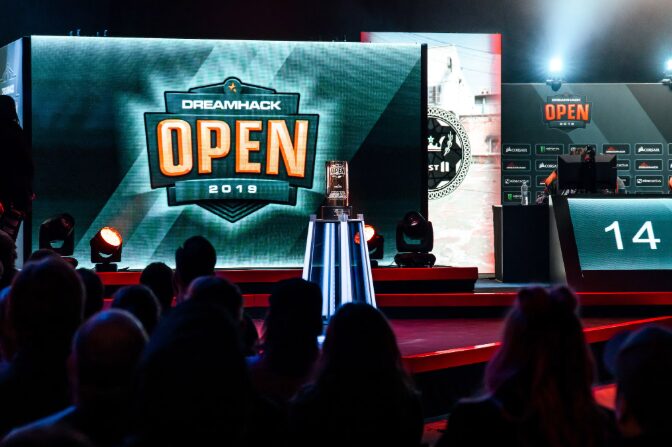
The transition from the legendary CS: GO to the new iteration of Counter-Strike 2 has become one of the largest events in the history of the gaming industry. Valve did not break what had worked flawlessly for decades; Instead, it brought the iconic tactical shooter to the modern Source 2 engine, dramatically improving the physics, lighting, and network architecture. Today, CS2 tournaments are covered by websites such as https://vivatbet.ie/en/esports/real/cs-2 for people to watch them and make predictions from all over the world, and prize pools amount to millions of dollars. This discipline attracts not only hardcore gamers, but also a huge audience, for whom detailed match analytics and CS betting have become an integral part of immersion in the atmosphere of big eSports. But what exactly is the secret of such incredible and sustainable popularity?
The Perfect Balance – Easy To Understand, Hard To Master
The fundamental reason for Counter-Strike 2’s success lies in the brilliant simplicity of its basic rules. Unlike MOBAs, such as Dota 2 or League of Legends, where a newbie must learn hundreds of characters, their unique abilities, and complex item combinations, in CS2 everything is intuitive from the very first second.
Two teams of five face off on a map: terrorists and counter-terrorists. The goal of the terrorists is to plant a C4 at one of the points or eliminate opponents, while the task of the counter-terrorists is to prevent the bomb from being planted, defuse it, or eliminate the opposing team. This crystal-clear concept allows anyone to instantly engage in watching the match. Behind this superficial simplicity lies a bottomless tactical depth: understanding timing, controlling weapon recoil, and a flawless knowledge of map geometry and grenade placement require thousands of hours of dedicated practice for professionals.
In-Game Economy – Chess with Weapons
To win in Counter-Strike 2, it is never enough to just have good aiming; because of reaction speed, there is a real-time economic strategy aspect built into the game. At the start of each round, teams earn virtual dollars for kills, wins, and losses in previous rounds. These funds are used to purchase weapons, armor, and equipment.
Skill in economic management distinguishes a good team from a great one. Captains must make critical mathematical decisions: should they spend their last money now to try to snatch a crucial round, or should they play a defensive game, an «eco-round», preserving funds for a full-fledged purchase in the next phase? Spectators love watching how a team armed only with pistols manages to outplay heavily armed opponents through brilliant tactics. These unpredictable moments generate the strongest emotions in the stands.
New Smoke Grenade Physics And A Tactical Revolution
The main gameplay innovation during the transition to CS2 was the voxel system of smoke grenades. In previous versions of the shooter, smoke was a regular opaque texture. In Counter-Strike 2, the smoke screen became a dynamic volumetric object that interacts realistically with the environment: smoke fills empty spaces, spreads along stairs and, most importantly, briefly dissipates from the explosion of a fragmentation grenade or heavy fire.
This mechanic changed the tactical pattern of the game. Professional teams had to invent new ways of defense and attack. A sudden shot through smoke that opens the sniper’s window of vision for a split second adds an unprecedented level of cinematic intensity and tension to matches.
The Architecture Of The Competitive Scene And The Phenomenon Of The «Majors»
One of the main reasons for the longevity and popularity of the Counter-Strike series is the unique structure of its eSports ecosystem. Unlike some modern disciplines, which have transitioned to closed franchise leagues, where a spot is purchased for a huge sum, the CS2 competitive scene remains extremely open and democratic. Any team of five talented players, gathered in a computer club or online, has a theoretical chance of advancing through a series of open qualifiers and reaching the main tournament of the year, the Major. This «backyard-to-stadium» system maintains tremendous motivation among amateurs and regularly produces new stars on the professional scene.
The Major tournaments themselves, held with the direct support of developer Valve, represent the pinnacle of CS betting prestige. Winning a Major forever etches players’ names in history, but the financial model of these tournaments is equally important. Valve releases in-game stickers featuring team logos and player autographs, which regular users purchase to decorate their virtual weapons.
Half of the proceeds from these sticker sales go directly to esports organizations and the athletes themselves. This crowdfunding system generates tens of millions of dollars, providing financial stability even to small teams that qualify for tournaments. This synergy between ordinary fans, who support their idols with their rubles, and professionals creates one of the most dedicated and cohesive communities in the gaming industry.
Team Synergy And Strict Roles
In Counter-Strike esports, it’s impossible to win alone. Success is built on a strict division of roles and flawless communication:
Watching five completely different players act as a single, perfectly tuned machine provides aesthetic pleasure even for those spectators who rarely play the game themselves.
NeverEnding Hype
Counter-Strike 2 is a benchmark example of the ideal esports discipline. The game is transparent and accessible to the casual viewer, yet possesses such depth of mechanics that professionals can hone their skills for decades. A fair competitive core, where human skill and tactics decide everything, not chance or paid bonuses, makes CS2 a true digital sport. Each major tournament becomes a global celebration, proving once again that the clash of terrorists and special forces in virtual arenas is a spectacle that has forever cemented itself as a treasure trove of the global entertainment industry.