
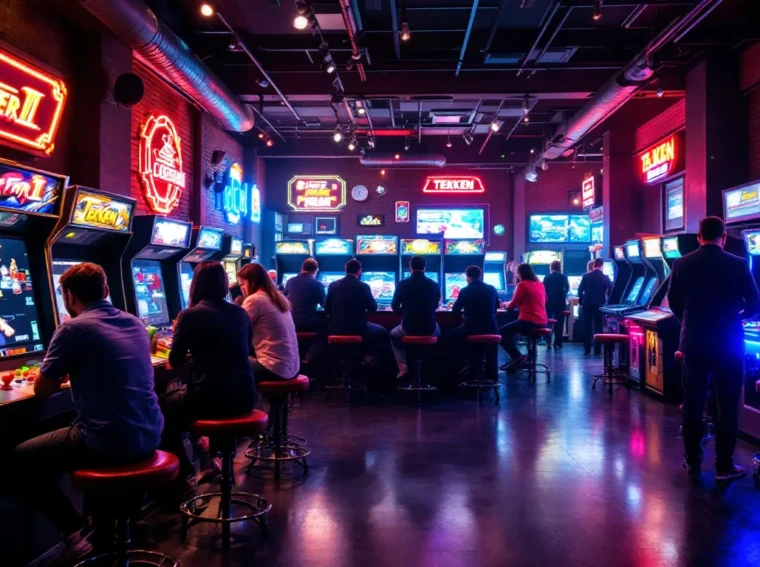
Arcade fighting games shaped everything you play today. Before online matchmaking, rollback netcode, and esports sponsorships, gamers fed quarters into cabinets to prove they were the best in the local arcade. Street Fighter’s hadoken, Mortal Kombat’s fatalities, and countless other franchises didn’t just entertain, they fundamentally changed how games were designed and how people competed. These old arcade fighting games created the foundational mechanics, competitive culture, and design philosophy that dominate competitive gaming in 2026. Whether you’re a seasoned player curious about your genre’s roots or a newer gamer wondering why the meta still revolves around concepts born in the ’80s and ’90s, understanding these classics isn’t just nostalgia, it’s essential gaming literacy. This dive explores the evolution, legends, and lasting impact of the golden age of arcade fighters.
Key Takeaways
- Old arcade fighting games established fundamental mechanics like hit stun, block stun, and the six-button control scheme that remain industry standard and define modern competitive fighting games today.
- Street Fighter II and Mortal Kombat revolutionized arcade gaming by proving fighting games could balance accessibility for casual players with deep, skill-based gameplay that rewards frame-perfect execution and competitive mastery.
- The competitive infrastructure built around arcade fighting games—from local tournaments to Evolution Championship Series—created the template for modern esports and proved that fighting games could sustain decades-long competitive communities.
- Modern re-releases, emulation, and streaming have made classic arcade fighting games accessible to new generations, allowing 2026 players to learn directly from arcade legends and experience the unmodified gameplay that shaped gaming history.
- Character design philosophy from arcade fighters—including archetypes like grapplers, zoners, and all-rounders—continues to influence game design because these fundamental playstyle concepts create meaningful strategic depth and player expression.
What Defined the Golden Age of Arcade Fighting Games
The Rise of Quarter-Eating Cabinets in the 1980s and 1990s
The 1980s weren’t just about arcade fighting games, they were about the arcade experience itself. Kids and teenagers had a reason to leave the house: the local arcade was the social hub. When Street Fighter hit arcades in 1987, it didn’t just offer a game: it offered a stage for human competition in a physical space. That mattered. The cabinet was a profit machine that demanded engagement: lose, and you’d plunge another quarter to try again. This economic model directly influenced game design. Matches needed to be quick enough that a novice could steal a round (keeping them invested) but skill-based enough that a veteran could dominate (justifying the “play one more time” loop).
The 1990s ramped this up. Mortal Kombat, released in 1992, pushed arcade revenues through the roof partly because of its violence controversy, but mostly because the gameplay was so immediately satisfying and competitively deep. Arcades weren’t dying, they were booming. Fighting game cabinets became the centerpiece of arcade floors, drawing crowds that wanted to watch as much as play. The financial incentive meant developers were rewarded for creating games that would generate repeat plays, skill progression, and competitive drama.
Gameplay Mechanics That Changed Gaming Forever
Old arcade fighting games established mechanics that are still standard today. The six-button control scheme (or variations thereof) became industry standard because it offered accessibility to newcomers while enabling frame-perfect execution for competitors. A casual player could mash buttons and feel effective. A skilled player could pull off frame-link combos that felt superhuman. That scalable skill ceiling became the blueprint for fighting game design.
Hit stun and block stun created the rhythm of fighting games. When you hit an opponent, they’re locked in animation for a set number of frames. This isn’t a bug, it’s the foundation of combo systems and defensive options. Similarly, momentum-based movement and attack recovery frames meant positioning and reads mattered as much as reflexes. You couldn’t just spam the fastest move. If it whiffed, you were punished.
Special moves like hadoken, spinning piledriver, and fatalities weren’t just flashy, they were the identity of characters. They required input sequences (quarter-circle forward + punch) that created a skill gate: mastering your character meant internalizing their move list, not just button-mashing. These mechanics created matchup depth. Street Fighter II had 12 characters, each with fundamentally different tools, playstyles, and matchups against opponents.
The hit detection and priority system (some moves beat others in neutral) created a rock-paper-scissors layer on top of execution. A hadoken beats a jump-in but loses to a teleport. This meant reading and prediction mattered. You weren’t just reacting, you were thinking.
The Legends: Street Fighter, Mortal Kombat, and Beyond
Street Fighter: The Series That Started It All
Street Fighter (1987) was good. Street Fighter II (1991) was revolutionary. The original cabinet version ran on Capcom’s hardware and was technically impressive for its time, but Street Fighter II: The World Warrior became a cultural phenomenon. It sold over 100,000 arcade cabinets worldwide, making it one of the highest-grossing games of the decade. Why? The game balanced accessibility with depth.
Ryu, Ken, Blanka, E. Honda, Dhalsim, Guile, Zangief, and Chun-Li weren’t just palette swaps. Each had distinct move sets, hit boxes, and playstyles. A Dhalsim player fought completely differently than a Zangief player. Guile’s charge move mechanics made him unintuitive for button-mashers but devastating in experienced hands. This character variety meant the game had infinite replayability. You weren’t playing “Street Fighter II”, you were playing “Ryu vs. Guile matchup.”
Capcom released updates: Champion Edition, Hyper Fighting, and eventually Super Street Fighter II. Each patch adjusted balance and introduced new mechanics (like the Super Meter in Super). This iterative design philosophy is still alive in modern fighting games. The competitive scene that emerged around these cabinets created the first true fighting game esports. Players became celebrities. Daigo’s legendary parry against Justin Wong’s Sean (2004, Evolution Championship Series) is still legendary, proving that Street Fighter remained relevant and competitive years after its arcade peak.
Mortal Kombat’s Violent Innovation and Cultural Impact
Mortal Kombat (1992) entered the arena with one goal: differentiation. While Street Fighter relied on technical fighting game fundamentals, Mortal Kombat leaned into gore, fatalities, and visual spectacle. The game featured digitized sprites (actual photographed actors) instead of hand-drawn animation, making it look distinctly different from Street Fighter. More importantly, the fatality system, finishing moves that brutally killed opponents, became instantly iconic.
Parents hated it. Senators investigated it. The ESRB (Entertainment Software Rating Board) was partly created in response to Mortal Kombat’s violence. Yet this controversy made the game irresistible to teenagers. The arcade cabinets became forbidden fruit, which meant they were absolutely packed.
Gameplay-wise, Mortal Kombat wasn’t as technically refined as Street Fighter, but it was different enough to attract players seeking novelty. The run button made movement faster. Throws were more prominent. The mercy system (letting a defeated opponent stand up again) added psychological layers to matches. Sub-Zero, Scorpion, Liu Kang, and Sonya Blade had distinct playstyles, though the game was less balanced than Street Fighter II, some characters were clearly overpowered (looking at you, Sonya’s throw range).
Also, Mortal Kombat proved that violent spectacle could drive arcade revenue and cultural discussion. The franchise lasted decades because of that initial shock value, strong characters, and yes, the fatalities. Later entries like Mortal Kombat 3 refined the gameplay, while modern entries (Mortal Kombat 11, Mortal Kombat 1) continue the legacy on PC, PS5, Xbox Series X, and other modern platforms.
Other Franchises That Shaped the Genre
King of Fighters (KOF) series introduced team-based fighting (three characters per team) and maintained a cohesive narrative universe. KOF ’94 established that arcade fighters could be story-driven, not just mechanics-driven. The team dynamic created new strategic layers: composition, order, and synergy mattered.
Tekken brought 3D fighting to arcades. While 2D fighters like Street Fighter and Mortal Kombat dominated, Tekken (1994) proved that 3D movement, juggle combos, and sidestepping could create equally deep competitive games. Tekken eventually dominated the Japanese arcade scene and remains a pillar of modern fighting games (Tekken 8 launched in 2024 for PC, PS5, and Xbox Series X).
Samurai Shodown (1993) introduced weapon-based fighting with a focus on spacing and precision over button-mashing. Unlike other franchises that valued combo execution, Samurai Shodown rewarded reads and positioning. A single well-placed hit could turn a match. This created a different skill expression that attracted players who preferred methodical gameplay.
The Last Blade and Guilty Gear pushed creative character design and mechanical innovation. Guilty Gear especially became known for bizarre characters, aggressive gameplay, and mechanics like Roman Cancels that allowed players to interrupt animations. These games proved that arcade fighters could be experimental while remaining competitive.
Essential Old School Arcade Fighters Everyone Should Play
Must-Play Titles From the 1980s and Early 1990s
If you’re diving into old arcade fighting games, start here:
Street Fighter II (1991) – Still responsive, still balanced. The definitive entry point. You can play Champion Edition, World Warrior, or Super Street Fighter II depending on availability. Each version is slightly different, but all are excellent.
Mortal Kombat II (1993) – While the original popularized the series, MKII refined everything. Better balance, more characters, improved special moves. The jump from MK1 to MKII is massive.
King of Fighters ’94 (1994) – The template for every KOF game afterward. Sixteen teams of three characters each. The team-based format is addictive, and the sprite work is gorgeous.
Tekken 2 (1995) – Tekken 1 was clunky. Tekken 2 nailed the 3D formula. Fourteen playable characters, responsive button inputs, and juggles that still satisfy today. Tekken 2 is more “arcade” than Tekken 3’s increased speed.
Samurai Shodown (1993) – Different vibe entirely. Weapon-based, deliberate pacing, and instant-kill super moves. If you want a palate cleanser from button-heavy games, this is it.
Street Fighter Alpha 2 (1996) – More advanced than Street Fighter II but still arcade-centric. Super moves, air blocking, and dashes created a faster game. Alpha 2 sits perfectly between Street Fighter II’s fundamentals and the complexity of later fighters.
Hidden Gems and Cult Classics Worth Discovering
Not every arcade fighter got mainstream attention, but some developed devoted fanbases:
The Last Blade (1997) – SNK’s weapon fighter with insane character design and a “Desperation Move” system that rewards aggressive play. Blade 2 is slightly more balanced, but the original has charm.
Guilty Gear (1998) – The weirdest arcade fighter on this list. Characters like Ky Kiske (a holy knight), Axl Low (a time-displaced rockstar), and Dizzy (a literal creature). The gameplay emphasizes offensive momentum and combo trees. Modern Guilty Gear Strive is more accessible, but the original arcade version remains influential in fighting game circles.
Marvel vs. Capcom (1998) – Team-based, tag mechanics, and assist characters created chaos and depth. The game is unbalanced (Cable and Storm dominated), but that imbalance created a unique meta. Newer entries are more polished, but MvC1 started the crossover fighting game craze.
Darkstalkers 3 (1994) – Capcom’s gothic fantasy fighter with vampire protagonists. Less iconic than Street Fighter but beloved by enthusiasts. The character designs were ahead of their time, and the gameplay emphasized okizeme (mix-ups after knockdowns).
Fatal Fury 3 (1995) – SNK’s answer to Street Fighter. Features a back/forward lane system allowing side-to-side positioning. This added a layer of spacing that differed from Street Fighter’s horizontal-only movement. Fatal Fury remains popular in Asia but is undiscovered by many Western players.
Many of these games are playable today through emulation, modern re-releases, and compilation collections (discussed later).
The Technical Evolution: From Sprite-Based to 3D Transitions
2D Fighting Game Engine Innovations
The 2D fighting game engine evolved rapidly between 1991 and 1997. Street Fighter II ran on a dedicated arcade board (Capcom’s CPS-1) with custom hardware. The engine was optimized for this specific hardware, which meant every frame was predictable and consistent. When Super Street Fighter II added new characters, the engine had to accommodate expanded sprite sizes and animations. Capcom solved this by upgrading to the CPS-II board, which had more memory and processing power.
The CPS system became the standard for Capcom fighting games, powering Street Fighter Alpha series, Marvel vs. Capcom, and countless others. Meanwhile, SNK used their own hardware (the Neo Geo arcade system), which powered King of Fighters, Samurai Shodown, The Last Blade, and Fatal Fury. The Neo Geo was technically impressive, 32-bit visuals in an era when most arcade cabinets were 16-bit. This hardware advantage gave SNK fighters a visual edge that attracted players.
Frame-perfect precision was built into these systems. Unlike modern games running on variable hardware, arcade cabinets operated at locked frame rates (usually 60 FPS). Every animation, every move, every hit box was timed to the frame. This consistency meant that learning a character’s combos was learning absolute timing, not vague timing windows. A frame-link combo in Street Fighter II works the same way in 1991 and today because the frame data never changes.
Animation and sprite work improved dramatically. Early arcade fighters had simple, chunky sprites. By the mid-1990s, games featured smooth animations with detailed sprite work. Compare the original Street Fighter II’s Ryu to Street Fighter Alpha 2’s Ryu, the latter has more frames of animation, smoother transitions, and more expressive character designs. This didn’t change gameplay fundamentally, but it made the games feel more alive.
The Shift to 3D and Its Lasting Legacy
Tekken (1994) proved that 3D fighting games could work. The technical challenge was significant: 3D polygon rendering was demanding, and arcade cabinets had limited processing power. Tekken 1 was clunky, but Tekken 2 nailed it. The addition of the Z-axis (side-to-side) movement created new dynamics. A character could sidestep forward-facing attacks, adding a layer of positioning beyond the X-axis (forward/back) movement of 2D fighters.
Juggling became a defining mechanic in 3D fighters. In 2D games, combos are primarily ground-based. In Tekken, launching an opponent into the air opened up follow-up combos. This created explosive damage potential but required precision timing. A well-executed juggle combo could deal 40-60% damage in a single sequence. This meant juggling became a primary skill expression in Tekken.
Dead or Alive (1996) brought 3D fighting to a wider audience with faster gameplay and flashier visuals. DOA’s emphasis on quick, visceral matches appealed to arcade crowds accustomed to short-round gameplay. The series continued refining the formula across multiple arcade iterations and console ports.
The 3D revolution didn’t kill 2D fighting games, they coexisted. Street Fighter continued its 2D legacy, while Tekken dominated 3D arcade fighting. But, the success of 3D fighters changed arcade hardware expectations. Cabinets now needed to handle 3D polygons, which drove technological advancement. By the late 1990s, even Capcom-owned arcades housed both 2D fighters (Street Fighter Alpha 3) and 3D fighters (Street Fighter IV’s arcade version, released much later in 2009).
Modern fighters blend these legacies. Street Fighter 6 (2023) uses 3D models rendered to look like 2D sprites, maintaining the 2D fighting fundamentals while leveraging modern graphics. This hybrid approach honors the arcade tradition while embracing contemporary technology.
How to Play Classic Arcade Fighters Today
Emulation Options and Legal ROM Resources
Emulation is the primary way most people experience old arcade fighting games. MAME (Multiple Arcade Machine Emulator) is the most popular emulation platform. It’s open-source, free, and supports thousands of arcade ROMs. But, ROMs exist in a legal gray area. Technically, emulating games you own is legal in most jurisdictions, but downloading ROMs is copyright infringement if you don’t own the original arcade cabinet.
If you’re interested in emulation legally, purchase ROMs through authorized distributors. Some copyright holders have released their arcade games digitally, Capcom, SNK, and others have licensed their libraries. You’ll need a ROM file that matches your MAME version (MAME is frequently updated, and ROM sets change), an emulator front-end like Retro Arch for user-friendly interface, and patience setting up controls.
Running MAME properly requires specific ROM versions. A ROM set for MAME 0.139 won’t work perfectly in MAME 0.226 without adjustments. This technical barrier deters casual players but is second nature to enthusiasts. For fighting games specifically, MAME’s frame-perfect input handling makes it suitable for competitive practice, the emulation is accurate enough that you can grind combos.
Modern Re-releases and Compilation Collections
The easiest legal option is modern re-releases. Several companies have recognized the value of arcade fighting game archives:
Capcom Fighting Collection (2022) – Available on PC (Steam), PS4, PS5, Switch, and Xbox. Includes Street Fighter II Champion Edition, Street Fighter III: 3rd Strike, Super Gem Fighter Mini Mix, Red Earth, and others. This is the best entry point for casual players. The emulation is accurate, online play is available, and the collection costs $30.
SNK’s digital archives – SNK released a subscription service offering access to Neo Geo arcade games, including King of Fighters and Samurai Shodown classics. It’s no longer active as a standalone service, but many SNK games are available through other digital storefronts.
Street Fighter 6 (2023) – Modern entry, but it includes a “World Tour” mode featuring historical challenges based on classic arcade fighters. It’s less of an archive and more of a modern game inspired by arcade tradition. Available on PC, PS4, PS5, Xbox Series X/S, and Switch.
Tekken 8 (2024) – While a modern game, Tekken 8 includes character skins and stages that reference arcade history. The Tekken series has continuously evolved from its 1994 arcade origins, and Tekken 8 represents the mechanical refinement of 30 years of arcade traditions.
For retro collectors, Mobalytics offers guides on accessing classic games through legitimate channels, though their focus is broader than arcade fighters specifically.
Arcade Cabinet Collecting for Enthusiasts
The ultimate way to experience old arcade fighting games is on original hardware. Arcade cabinet collecting is an expensive but rewarding hobby. A working Tekken 2 arcade cabinet costs $2,000–$5,000 on the secondary market. Rarer games like The Last Blade can exceed $6,000. Cabinet maintenance is ongoing, CRT monitors degrade, joysticks wear out, and circuit boards occasionally fail.
Cabinet preservation requires knowledge. You need to understand how to replace a joystick (modern replacements differ from originals), how to troubleshoot ROM issues, and how to repair CRTs if they fail. Online communities like Arcade Collector forums help with restoration guides and parts sourcing.
For those with smaller budgets, arcade cabinet reproductions exist. New cabinets built to arcade specifications with pre-loaded ROM sets are available from companies like Arcade1UP (smaller, home versions) or custom builders (full-size reproductions). Prices range from $300 (Arcade1UP) to $3,000+ (custom full-size builds). Quality varies, Arcade1UP cabinets are scaled-down with smaller screens and controls, while custom builders can achieve arcade-authentic experiences.
The Competitive Scene: Esports and Speedrunning Communities
Tournament Play and Championship Moments
Arcade fighting game tournaments predate esports as we know it. Evolution Championship Series (EVO) started in 1996 as a local Las Vegas Street Fighter II tournament and became the de facto world championship for fighting games. By the 2000s, EVO attracted thousands of competitors from around the world, all competing on arcade-accurate emulation or original cabinets.
EVO’s cultural impact can’t be overstated. When Daigo Umehara performed a perfect parry against Justin Wong’s Sean in Street Fighter III: 3rd Strike at EVO 2004, it became the most replayed moment in fighting game history. Daigo blocked 15 consecutive hits with frame-perfect timing, a sequence that had maybe a 1-2% success rate. This moment proved that arcade fighting games remained compelling to watch and play at the highest level, nearly 15 years after Street Fighter III’s arcade release.
Street Fighter II tournaments in the early 1990s drew sponsorships and prize pools. Arcade operators would host local tournaments, with winners advancing to regional tournaments. This grassroots competitive infrastructure existed before the internet made streaming possible. Players had to travel, practice locally, and earn respect through results. The skill gap between casual arcade-goers and tournament players was massive.
Capcom Cup (the modern evolution of competitive Street Fighter) runs annually, but classic arcade fighters remain relevant in niche competitive scenes. Game8 maintains historical tier lists for arcade fighters, allowing players to compare meta development across decades. These lists show how character balance has been perceived over time.
Streaming Culture and Modern Interest
Streaming has revitalized interest in old arcade fighting games. Twitch streams dedicated to classic fighters attract thousands of viewers. Players stream Tekken 2 arcade tournaments, King of Fighters ’94 competitions, and Street Fighter III challenges. This wasn’t possible in the arcade era, players had to be physically present to watch high-level play.
Speedrunning emerged as a distinct discipline. While fighting game tournaments focus on competitive depth, speedrunners focus on execution. A speedrunner might clear Street Fighter II on the hardest difficulty with a single character in the fastest time possible, executing frame-perfect combos without being hit. This requires a different skillset than competitive play but uses the same fundamental knowledge.
Content creators on YouTube and Twitch have created massive audiences around arcade fighting game analysis. Channels dedicated to frame-data analysis, character matchups, and historical deep-dives attract viewers interested in the technical side of fighting games. Siliconera regularly covers both classic arcade fighters and modern fighting game news, bridging retro and contemporary discussions.
The 2020s have seen a resurgence in arcade fighting game interest. Modern entry points like Street Fighter 6 introduced millions of new players to fighting games. Many of these newcomers became curious about the genre’s history, leading them back to arcade classics. Online communities share strategies, frame data, and technical breakdowns of games released 30+ years ago. This is unprecedented, players from 2026 are learning from arcade players from 1992, trading knowledge across generations.
Why Old Arcade Fighting Games Still Matter in 2026
The arcade fighting games of the 1980s and 1990s established design principles that remain unchanged. Modern fighting games use the same button layouts, combo mechanics, hit stun systems, and character archetypes because these fundamentals work. A zoner (Dhalsim in Street Fighter, Zangief in Tekken) still plays the same way: control space, frustrate aggressive opponents, land massive punish damage when they get close. A grappler still sacrifices mobility and range for immediate, overwhelming offense. An all-rounder still balances speed, range, and damage without excelling at anything.
The skill expression in arcade fighters remains unsurpassed. Modern games add mechanics, Drive Impact in Street Fighter 6, Heat System in Tekken 8, but the core appeal of arcade fighters is pure execution. You’re reading an opponent’s tendencies and reacting with the fastest, most damaging response your character allows. This is why arcade fighters attracted competitive players then and attract them now.
Community and culture matter too. Arcade fighting games created the social infrastructure around competitive gaming. The arcade itself was a venue for human connection and skill validation. Before ranked ladders and matchmaking ratings, you earned respect through results at your local arcade. This created tight-knit communities that still exist digitally today. Modern fighting game esports owes everything to arcade culture.
Historically, arcade fighters preserved themselves. Unlike some arcade games that disappeared (how many people have played Joust recently?), fighting games remained playable. ROM sets survived. Hardware persisted in private collections. Communities maintained knowledge. This preservation culture means today’s players have unprecedented access to the entire genre’s history.
Most importantly, arcade fighting games proved that games could be both fun and competitive. Casual players could mash buttons and enjoy victories. Skilled players could spend years mastering frame-perfect combos and matchup knowledge. This scalable skill ceiling is the secret ingredient that made Street Fighter II transcendent and why modern fighting games still pursue this same balance. Every modern competitive game that values high-level execution and accessibility owes a debt to arcade fighting game design.
Conclusion
Old arcade fighting games aren’t relics, they’re foundational texts in gaming. Street Fighter II didn’t just launch a franchise: it established how fighting games should feel, how competitive gaming should work, and how games could be simultaneously accessible and infinitely deep. Mortal Kombat proved that innovation through spectacle and character identity could rival technical excellence. King of Fighters, Tekken, Samurai Shodown, and dozens of others expanded the genre’s possibilities.
The technical evolution from CPS-1 sprite-based fighters to 3D polygon battles to modern hybrid approaches shows how arcade fighting games adapted to technology rather than becoming obsolete. A modern player can load Tekken 8 on PC, PS5, or Xbox Series X and feel the arcade legacy in every juggle combo and frame-link punish.
For players jumping into classic arcade fighters today, the journey is accessible. Emulation, modern re-releases like Capcom Fighting Collection, and continued community support mean you can experience Street Fighter II, Mortal Kombat, or Tekken 2 without hunting for arcade cabinets. Whether you’re diving into old school gaming nostalgia or seeking to understand the roots of competitive gaming, these games deliver. They’re responsive, balanced, and designed for genuine mastery, not progression systems or cosmetics.
The competitive scene around arcade fighters proves their staying power. EVO continues. Speedrunners push execution boundaries. Content creators analyze frame data from 1994. New players discover these games through modern entries and develop genuine interest in the originals. This cross-generational engagement is rare in gaming.
If you haven’t explored old arcade fighting games, start with Street Fighter II or Tekken 2. Spend a week learning basic combos, understanding your character’s tools, and facing CPU opponents. Then try online play against real opponents (modern re-releases include netcode). You’ll understand why these games dominated arcades, why they matter competitively, and why 30 years later, nothing has fundamentally changed about what makes a fighting game great.