
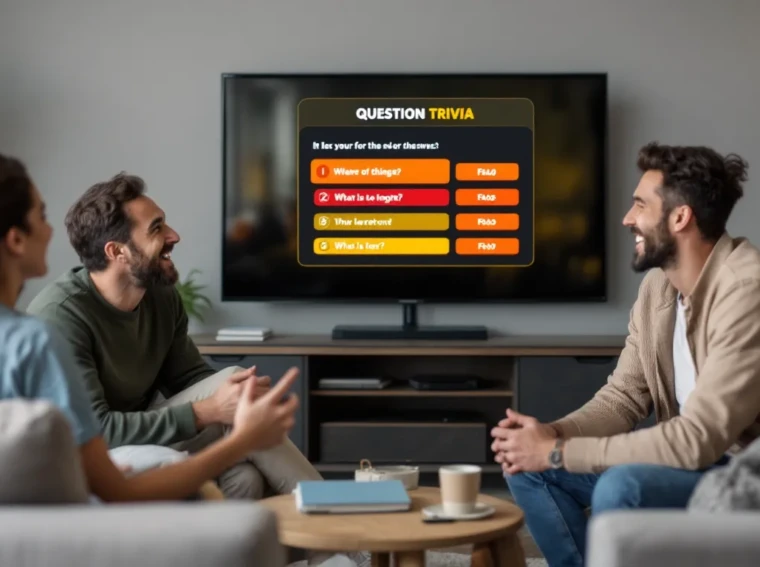
The Guy Game has carved out a peculiar niche in gaming history. Released in 2005, this controversial party game became infamous for the wrong reasons, questionable content and a lawsuit that pulled it from shelves, but beneath that baggage lies something genuinely fun for the right crowd: a trivia-based party experience that’s more about laughs and friendly competition than precision mechanics. If you’re curious about how this cult classic actually plays, what makes it tick, or where to experience it today, this guide breaks down the core gameplay, strategy tips, and why it still holds appeal for retro enthusiasts and party game fans in 2026.
Key Takeaways
- The Guy Game gameplay centers on straightforward trivia-based mechanics where players answer multiple-choice questions across diverse categories, with party mode supporting 2–4 local players for couch co-op fun.
- Party appeal trumps competitive skill—wrong answers in The Guy Game are intentionally designed for comedic effect, making group laughter and social interaction more important than mechanical precision.
- Strategic gameplay tips include recognizing question patterns, understanding answer probability traps, leveraging 2000s pop culture knowledge, and reading your opponents’ strength categories to gain an edge.
- Accessing The Guy Game in 2026 requires emulation using PCSX2 or finding rare second-hand copies, since the delisted title is no longer available through official digital channels.
- This cult classic remains historically significant as a boundary-pushing artifact of mid-2000s gaming culture that valued developer risk-taking and irreverent humor over modern brand safety standards.
What Is The Guy Game?
The Guy Game is a trivia-based party game originally developed by Gathering of Developers and released for Xbox, PlayStation 2, and PC in 2005. It’s a multiplayer experience designed for groups where players answer questions covering a wide range of topics, some legitimate trivia, some absurdist humor, and plenty of tongue-in-cheek content aimed squarely at adult players.
The game’s primary appeal was never about competitive gaming mastery: it was about social interaction, bluffing, and the absurdity of the questions themselves. Think of it as a digital version of a party game like Trivial Pursuit, but with irreverent humor and a focus on wrong-answer comedy rather than purely testing knowledge.
Game Overview And Historical Context
When The Guy Game launched in 2005, the gaming landscape was very different. Online multiplayer was less integrated, party games were still a legitimate arcade draw, and console gaming was exploding with experimental titles that pushed boundaries. This game pushed harder than most.
The title became controversial almost immediately, largely due to controversy surrounding footage used in the game and legal issues with people who appeared in promotional material. The game was actually pulled from retail shelves, making it harder to find legitimately in subsequent years. This rarity, combined with its party-game appeal and infamous reputation, gave it cult status among retro gamers.
Today, The Guy Game is primarily accessed through emulation, second-hand copies, or legally distributed digital archives. For collectors and retro enthusiasts, it represents an interesting snapshot of mid-2000s party gaming culture, a time when developers were willing to take bigger risks with provocative content in ways that would face more scrutiny now. That historical context is important: you’re not just playing a trivia game, you’re engaging with a piece of gaming history that faced real consequences for pushing boundaries.
Core Gameplay Mechanics Explained
At its core, The Guy Game strips gameplay down to the essentials: answer questions correctly, earn points, and compete against other players. There’s no complex UI, no skill-based mechanics in the traditional sense, and no reflexes required. This simplicity is both the game’s strength and its limitation.
Each turn, a player is presented with a question and multiple choice answers. They select what they believe is correct, and points are awarded based on accuracy. The game supports up to four local players simultaneously, making it ideal for couch co-op party sessions where everyone can laugh at wrong answers together.
Question Types And Categories
The Guy Game’s questions fall into several distinct categories, and knowing what you’re walking into helps set expectations:
- Straight trivia questions: These are legitimate facts about history, pop culture, geography, and general knowledge. They range from easy to difficult.
- Absurdist/joke questions: Many questions are deliberately framed to be misleading or funny, with ridiculous wrong answers included specifically for comedic effect.
- Opinion-based questions: Some prompts ask which option is “correct” based on majority opinion or strange criteria, making them less about knowledge and more about guessing social consensus.
- Pop culture references: Heavy emphasis on 2000s entertainment, with references that feel dated if you’re playing in 2026.
The variety keeps rounds fresh because you genuinely don’t know whether you’re about to answer a serious question or something designed purely for the punchline of a wrong answer.
How To Answer And Earn Points
The point system is straightforward: correct answers earn points, usually with bonuses for speed or difficulty. Wrong answers earn nothing, but that’s where the party dynamic kicks in, when someone gets something hilariously wrong, it becomes a shared joke for the group.
In multiplayer settings, the first player to answer correctly tends to earn the full point value. Speed matters less than accuracy, since it’s not a timed quick-response game like some modern party titles. This makes The Guy Game accessible to players of varying reflexes and skill levels: it’s purely about knowledge and luck when questions are ambiguous.
Single-Player Campaign Mode
If you’re playing solo, The Guy Game includes a single-player campaign that gives structure to what could otherwise be a series of random trivia questions. The campaign mode progresses through different “seasons” or themed rounds, with difficulty ramping up as you advance.
Single-player isn’t really where The Guy Game shines, it’s a party game at heart, so playing alone strips away the social comedy that makes it entertaining. But, the campaign mode does serve as a way to practice and get familiar with question types and categories before bringing friends into a multiplayer session. You can learn which categories are your strongest, practice your bluffing instincts (since some questions reward intuition over pure knowledge), and unlock additional content if you’re aiming for completion.
The campaign offers a few difficulty tiers, and progression is tied to accumulating points. You’ll need a certain score threshold to advance to the next round, so replaying earlier stages if you’re struggling with harder questions is part of the experience.
Party Mode And Multiplayer Features
This is where The Guy Game actually lives. Party mode is designed for 2–4 local players, all gathered around the same screen, taking turns answering questions and competing for the highest score. There’s no online multiplayer, this is purely couch co-op territory, which is both limiting and intentional. The game’s appeal comes from the shared laughter and groaning when someone gets a ridiculous question wrong, or when the absurdity of the wrong answers becomes the highlight of the round.
Rounds progress with each player taking a turn at a question. Once everyone has answered their question for that round, scores are tallied and the next round begins. Games typically last 15–30 minutes depending on settings, making it a quick option for a night with friends.
The game tracks running scores throughout play, so you can see who’s winning in real-time. This creates natural tension, especially in the final rounds, where a couple of correct answers can swing the match entirely.
Difficulty Levels And Game Settings
The Guy Game offers customizable difficulty settings that affect question complexity and variety:
- Easy: Questions are more straightforward, with fewer misleading wrong answers and more obvious correct options. Good for casual play or introducing new players.
- Medium: A balanced mix of straightforward and tricky questions. This is the default difficulty for most social gaming.
- Hard: Questions become genuinely challenging, with better-disguised correct answers and more ambiguous wording. Wrong answers are more plausible, making it harder to guess even if you don’t know the fact.
You can also customize the number of rounds and the categories included in a given game session. If your group is strong on pop culture but weak on history, you can load a session with more entertainment questions and fewer geography-focused ones. This flexibility makes The Guy Game work better for different friend groups with different knowledge bases.
Tips To Win At The Guy Game
While The Guy Game is designed more for fun than competitive dominance, there are legitimate strategies that can improve your score and give you an edge when playing with others.
Understanding Probability And Odds
Not all wrong answers are created equal. In The Guy Game, especially on higher difficulties, the game designers craft wrong answers that are plausibly correct, they sound right even when they’re not. Understanding this is key to avoiding traps.
When you’re genuinely unsure, pay attention to answer structure. If three answers are formatted the same way and one is oddly phrased or sounds like a joke, that’s often a hint. The game loves putting the real answer next to absurd decoys. If you spot a pattern, like answers that are all years, or all names, the odd one out is worth considering.
Probability-wise, in multiple choice with four options, random guessing gives you a 25% success rate. But The Guy Game isn’t random if you’re paying attention. Categories repeat, and question difficulty scales in predictable ways. If you’ve played several rounds, you start recognizing the game’s logic.
Best Strategies For Party Play
When playing with others, the metagame changes. It’s not purely about getting answers right: it’s about managing expectations and reading your competition:
- Don’t overthink obvious questions: The game loves setting traps with deceptively simple-sounding questions. If something seems too easy, trust your instinct but verify mentally before committing. The wrong answer comedy comes from people confidently selecting something ridiculous.
- Learn the 2000s reference bias: The Guy Game is stuck in 2005. If a question references pop culture, entertainment, or news, it’s almost certainly about mid-2000s events. This is actually predictable if you’re familiar with that era.
- Use the difficulty selector strategically: In group play, selecting medium difficulty creates the most fun, hard enough to miss questions but not so hard that nobody knows anything. Easy difficulty feels boring for experienced players but works if your group includes newcomers.
- Pay attention to category clusters: The game tends to group similar questions together. If you just nailed three history questions, expect the next round to shift to pop culture or science. Knowing when your strength category is coming up helps you prepare mentally.
- Bluff with confidence: This is a party game, not a knowledge test. When you’re genuinely unsure, confidence in your answer often influences how others perceive your correctness. In the social dynamic of couch gaming, that matters more than you’d think.
- Track scoring trends: If you notice certain players dominating specific categories, it’s useful information. You can anticipate how aggressive to be with your betting or strategy adjustments in final rounds.
Playing The Guy Game Today: Availability And Emulation
In 2026, legally obtaining The Guy Game is complicated. The original physical copies for Xbox, PS2, and PC are collector’s items now, often priced significantly above their original retail value due to rarity. The game was delisted from digital stores years ago, and legitimate new copies are difficult to find.
Your realistic options are:
- Second-hand physical copies: eBay, retro game shops, and specialty retailers occasionally stock original Xbox or PS2 copies. Expect to pay premium prices ($50–$150+ depending on condition and platform).
- Emulation: The Guy Game is fully playable via PS2 emulation using tools like PCSX2. The emulation is stable, and the game runs without major graphical glitches. This is the path most modern players take.
- PC version: If you can find a legitimate copy of the PC version, it runs on older systems and may still function on modern PCs with compatibility settings.
Emulation is technically a gray area legally, you’re supposed to own the original to play it legally, though enforcement is inconsistent. For a game as niche and delisted as this one, emulation is how the community keeps it alive. Sites like Shacknews and GameSpot have documented the history of delisted games, and The Guy Game frequently appears in those retrospectives.
If you do go the emulation route, you’ll need:
- A PS2 emulator (PCSX2 is the standard)
- An ISO file of the game
- A controller with analog sticks (the game heavily uses analog input)
- A PC capable of running the emulator (modern laptops handle it fine at 1080p/60fps)
The emulation experience is solid. Graphics look clean upscaled, and there are no audio glitches or gameplay issues. It’s genuinely one of the cleanest emulation experiences for PS2 games, likely because the game’s graphics engine is relatively simple.
Why The Guy Game Remains A Cult Classic
Two decades later, why does anyone still care about The Guy Game? Part of it is pure nostalgia, gamers who remember it from college parties or arcades. But there’s more to its lasting appeal than that.
First, it represents a specific era of gaming that took risks. Modern game companies are risk-averse, heavily focused on brand safety and avoiding controversy. The Guy Game’s existence, for all its flaws, represents an era when developers published games knowing they’d offend people, and that was sometimes the point. Revisiting it now feels like stepping back into a different entertainment landscape.
Second, party games in that mold don’t really exist anymore. Modern party gaming gravitates toward Nintendo Switch titles, mobile experiences, or asymmetric multiplayer. Pure local-multiplayer trivia games have largely disappeared. The Guy Game fills a niche that’s gone underserved. For groups looking for couch co-op experiences that don’t require skill-based gameplay or reflexes, it’s still surprisingly effective.
Third, the sheer absurdity works. Developers like Twinfinite frequently highlight party games in their guides and features because they recognize that mechanical depth isn’t required for fun. The Guy Game understood that wrong answers could be as entertaining as right ones, maybe more so. That philosophy still resonates.
Finally, it’s become a historical artifact. Gaming history enthusiasts, content creators, and retro reviewers periodically revisit The Guy Game to document it and understand the context of its controversy. That documentation keeps it alive in the community’s consciousness, introducing new players to a piece of gaming history they might never have encountered otherwise.
Conclusion
The Guy Game is exactly what it promises: a party-focused trivia experience designed for laughs and competition among friends. The gameplay is straightforward, the strategy is light, and the appeal is grounded in social interaction rather than mechanical mastery. In 2026, accessing it requires some effort, emulation being the most practical path, but for groups interested in retro party gaming or gaming history, the effort is worth it.
Understanding the core mechanics, learning the question patterns, and knowing when to trust your instincts will improve your performance. But eventually, The Guy Game succeeds or fails based on the people you’re playing with and your willingness to laugh at the absurdity. That hasn’t changed since 2005, and it’s unlikely to change anytime soon.