
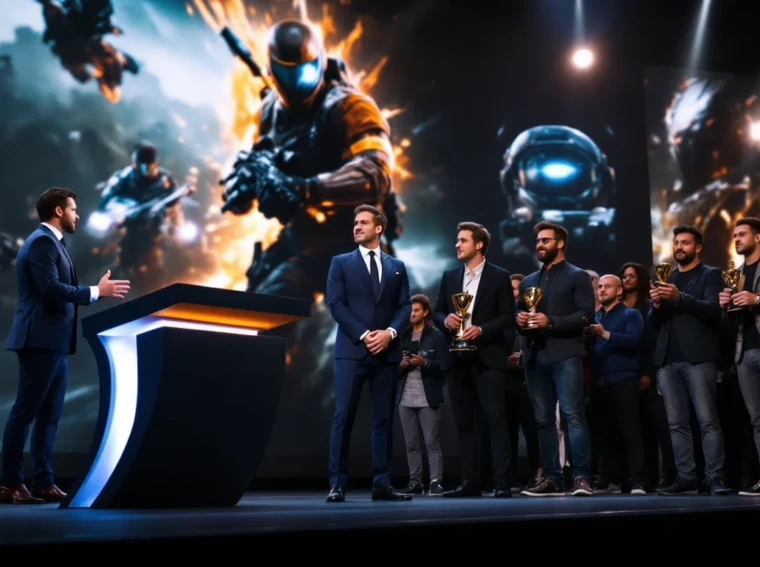
Every year, The Game Awards brings the gaming world to a standstill. Streamers, pros, and casual fans alike tune in to see which games will be crowned the industry’s finest. And while categories like Game of the Year get the hype, there’s something special about the Best Multiplayer Game award, it’s where the real competitive spirit lives. This isn’t about a single-player narrative or solo experience: it’s about which game nailed online connectivity, balanced gameplay, and the kind of community engagement that keeps players coming back night after night. Whether you’re a battle royale grinder, an esports competitor, or someone who just wants a solid co-op experience with friends, understanding what The Game Awards recognizes as the best multiplayer game tells you a lot about where the industry is headed. In 2026, that conversation is more important than ever as live service games dominate the landscape and the definition of “multiplayer excellence” continues to evolve.
Key Takeaways
- The Game Awards Best Multiplayer Game category recognizes titles excelling in competitive or cooperative online play, and a win signals industry legitimacy that translates to millions of new players and continued development funding.
- Award-winning multiplayer games share non-negotiable fundamentals: tight mechanics, fair balance patches based on data rather than complaints, robust netcode with low global ping, and active community moderation.
- The voting process combines jury panel expertise (journalists, esports personalities, and industry figures) with fan votes, though the jury typically holds 90% of the voting weight to reflect informed opinion.
- Recent winners like Helldivers 2 prove that accessible, chaotic fun with cross-play support and longevity through seasonal content can compete with traditional esports heavyweights.
- The category has evolved to include diverse multiplayer philosophies—from tactical shooters and battle royales to cooperative roguelikes and fighting games—reflecting the industry’s shift toward live service games and multi-platform accessibility.
- Award contenders must demonstrate commitment to ongoing development, including seasonal updates and balance refinements, as live service longevity is now a baseline expectation rather than optional content.
Understanding The Game Awards Best Multiplayer Game Category
The Game Awards Best Multiplayer Game category exists to celebrate titles that excel specifically in competitive or cooperative online play. This isn’t a catchall for games that happen to have multiplayer, it’s reserved for games where the multiplayer experience is the primary focus or core strength. Think of it as the category that recognizes titles built from the ground up to be played with (or against) other human players.
The category has grown more competitive and nuanced over the years. What once might have been dominated by traditional esports titles has evolved to include battle royales, extraction shooters, team-based tactical games, and even asymmetrical multiplayer experiences. Games like Helldivers 2 and Call of Duty franchises have historically dominated this space, but the landscape shifts depending on what resonates with the voting body in any given year.
Why does this category matter? Because it directly influences which games get funding, marketing push, and continued development from major publishers. A nomination here signals industry legitimacy, and a win can translate to millions of new players discovering a game. For developers, it’s validation that their netcode works, their balance patches resonate, and their community management strategy is paying off.
What Criteria Does The Game Awards Use For Judging
The Game Awards maintains a judging panel comprised of gaming journalists, influencers, esports personalities, and industry figures. This blend of perspectives means the award considers both critical acclaim and player sentiment. But, the exact weighting of criteria isn’t always transparent, and that’s intentional. The organization wants the process to reflect genuine opinion rather than a spreadsheet formula.
That said, certain factors clearly influence voting:
• Netcode quality and server stability – Does the game run smoothly across regions without lag or desync issues?
• Competitive balance – Are the meta shifts organic? Do balance patches feel thoughtful rather than knee-jerk?
• Player retention and engagement – Are people still playing six months, a year, or multiple years after launch?
• Innovation in multiplayer design – Does the game introduce new mechanics or refine existing ones in meaningful ways?
• Community health – Toxic matchmaking environments and poor player behavior can sink even great games.
• Accessibility and platform support – Cross-play, controller support, and options for different player skill levels matter.
How Voting Works And Who Decides The Winner
The voting process for The Game Awards happens in two stages. First, The Game Awards judges vote on nominations. The public then participates in the second round, where fan votes count alongside the jury panel’s final decision, typically weighted at 10% fan votes, 90% jury votes, though this can vary by category.
Nominee announcements happen months before the live ceremony, giving the gaming community time to analyze, argue, and build cases for their picks. It’s not uncommon to see discourse shift after a major patch drops or a new competitive season launches. A game that seemed like a lock for a win can suddenly look vulnerable if balance issues emerge or a competing title drops a landmark update.
Who specifically votes? The jury includes major gaming media outlets, esports analysts, and content creators with proven credibility. Game Rant and outlets of similar stature typically have representation. This ensures votes reflect informed opinion rather than pure popularity contests, though the public vote still provides a reality check on industry consensus.
Past Winners: A Look At Championship-Winning Multiplayer Titles
The Game Awards Best Multiplayer Game category has crowned some genuinely defining titles over its existence. Each winner tells a story about what the gaming community valued in that particular year.
Helldivers 2 (2024) was a recent standout winner, surprising some critics who thought a third-person co-op shooter could compete with traditional esports heavyweights. The game’s success proved that approachable, chaotic fun and cross-play accessibility could beat out complexity. It had players across PC, PlayStation 5, and Xbox jumping into procedurally generated missions with friends and strangers alike.
Before that, the category saw wins from franchises like Call of Duty, Valorant, and League of Legends, titles that represent different multiplayer philosophies. Valorant won recognition for its precise tactical gameplay and competitive integrity. League of Legends dominated for years due to its esports ecosystem and constant balance refinement.
Earlier winners included Fortnite, which revolutionized the battle royale space and brought multiplayer gaming to mainstream audiences. The game’s cultural impact and ability to stay relevant through cosmetics, events, and gameplay updates made it a logical choice. Before the rise of battle royales, titles like Overwatch won for introducing hero-based team play to a wider audience.
Evolution Of The Category Through The Years
The category itself has evolved significantly. Early years focused heavily on traditional competitive titles and established franchises. Winners tended to be games where victory conditions were crystal clear: win the match, climb the ranking ladder, become the champion.
Over time, the definition broadened. Cooperative experiences started gaining traction. Games like Deep Rock Galactic, Exploring Multiplayer Entertainment: Where Digital Fun Meets Happiness, and even roguelikes with robust co-op modes began showing up as nominees. This shift reflects players’ growing interest in shared experiences beyond pure competitive ranking.
Live service games started dominating the conversation entirely. The one-time separation between “multiplayer game” and “live service game” blurred completely. Modern winners are expected to have seasonal content, battle passes, and ongoing balance patches. A game that launches complete and never updates can’t compete anymore, longevity is now a baseline expectation.
Another shift: accessibility and platform inclusivity became judging priorities. Games locked to one platform or requiring high-end hardware to run smoothly started losing favor to titles offering cross-play, cloud support, or mobile versions. This reflects gaming’s evolution into a truly multi-platform ecosystem.
Notable Nominees That Shaped The Category
Not every great multiplayer game wins the award, but nominees that didn’t take home the trophy have often shaped the conversation around what multiplayer gaming should be.
Counter-Strike 2 earned nominations for its modernization of tactical shooter design. Even before its official release, its technical improvements and competitive fidelity made it a strong contender. The game proved that a 25-year-old franchise could reinvent itself and remain the gold standard for precision-based multiplayer.
Baldur’s Gate 3 shocked some by earning a multiplayer nomination even though being primarily a single-player experience. Its turn-based multiplayer mode and the broader industry discussion about what “multiplayer” means earned it a place in conversations. This nomination signaled that The Game Awards was willing to reconsider category boundaries.
Tekken 8 and Street Fighter 6 brought traditional fighting game communities into the award conversation. These games proved that 1v1 esports titles still belonged at the table alongside team-based shooters and battle royales. The nomination acknowledged that multiplayer isn’t just about player count, it’s about the authenticity of the competitive experience.
Palworld emerged as a cultural phenomenon and grabbed nomination consideration for its co-op infrastructure even though being primarily a creature-catching game. Its cross-platform multiplayer functionality and appeal to both casual and dedicated players made it relevant to the conversation.
When to Play Solo vs. Multiplayer in Fantasy Video Games highlights how modern games are blurring the line between single and multiplayer. Nominees increasingly represent games where both modes coexist meaningfully, allowing players to choose their preferred experience without sacrifice.
Each of these nominees, even though not winning, pushed the category forward. They forced the voting body to articulate what they valued and sparked community debate about multiplayer gaming’s direction.
What The Best Multiplayer Games Have In Common
Strip away the graphics, the IP recognition, and the marketing budgets, and the best multiplayer games share certain non-negotiable qualities. Understanding these separates games that simply have multiplayer from games that excel at it.
Gameplay Mechanics And Balance
Every winning game gets the fundamentals right: the mechanics are tight, responsive, and fair. If you lose a match, you know why. You got outplayed, not screwed by lag, RNG, or broken hitboxes.
Balance doesn’t mean every character, gun, or ability is identical. It means the metagame shifts intentionally, patches are data-driven rather than reactive, and the developers understand their own game deeply enough to make meaningful adjustments. Valorant excels here, every patch note feels surgical. A weapon doesn’t get nerfed because pro players complained: it gets adjusted because stats prove it’s overperforming.
Weapons, abilities, and characters need clear strengths and weaknesses. Overloaded kits where one option dominates everything else create boring metas where players have no real choice. The best multiplayer games make you consider trade-offs: Is this long-range weapon worth sacrificing mobility? Is this tanky character worth slower reaction times?
RNG has a place in multiplayer games, but not where it decides matches. A battle royale’s random loot distribution is fine: a competitive shooter where hit registration is inconsistent is a dealbreaker. Developers of award-winning titles understand this distinction.
Community Engagement And Longevity
A multiplayer game is only as good as its community, and the best ones have developers actively listening. This doesn’t mean appeasing every complaint, it means transparent communication, regular updates, and genuine effort to address systemic issues.
Longevity matters enormously. Game Informer and similar outlets regularly cover the staying power of multiplayer titles. A game that launches strong but hemorrhages players within three months doesn’t deserve recognition. Award winners maintain active populations for years, attracting new players while retaining veterans.
Seasonal content, battle passes, cosmetics, and regular balance patches aren’t frivolous, they’re infrastructure. They give players reasons to return, provide revenue for ongoing development, and signal that the game is alive and evolving. The worst multiplayer games feel abandoned: the best feel constantly tended.
Community moderation is overlooked but critical. Toxic matchmaking experiences, unchecked harassment, and poor reporting systems can poison otherwise excellent gameplay. Winners typically have both automated systems and human moderation keeping the environment relatively healthy.
Innovation And Technical Excellence
The best multiplayer games either invent something new or refine something existing to near-perfection. They don’t need to do both, but they need one.
Helldivers 2 didn’t invent co-op shooting, but it perfected the formula: procedurally generated missions, predictable gunplay, and chaotic fun accessible to anyone. Counter-Strike 2 didn’t invent tactical shooting: it optimized netcode and visual clarity to championship-grade precision.
Technical excellence extends beyond graphics. It’s about server infrastructure, netcode quality, matchmaking algorithms, and overall stability. A game running at 120 FPS on high-end hardware but stuttering on mid-range systems isn’t technically excellent. A game with sub-20ms ping globally with robust region selection is.
Cross-play and cross-progression have become baseline expectations. Games that lock players into ecosystem-specific servers or force them to restart progression across platforms fall behind. Award contenders support player choice and technical flexibility.
Accessibility features matter too, controller remapping, colorblind modes, adjustable subtitle sizes, and options for different ability levels aren’t charity. They’re the hallmark of games designed for actual humans with different needs and preferences.
How This Award Impacts The Gaming Industry
The Game Awards Best Multiplayer Game award carries real weight in the industry. A win doesn’t just mean prestige, it translates directly into business impact.
Publishers greenlight sequel funding, live service continuity, and aggressive marketing campaigns based on this award’s visibility. Winning Helldivers 2 guaranteed Arrowhead Game Studios additional resources and brought the title massive commercial success. That success justifies continued development and encourages other studios to invest in similar multiplayer experiences.
For players, the award signals which games are worth time and money. The average gamer sees “Best Multiplayer Game” and takes it as credible recommendation. This drives sales, concurrent player spikes, and streaming viewership.
Developer morale matters too. A team that wins The Game Awards gains industry credibility, attracts top talent, and feels validated in their design philosophy. For lesser-known studios, a nomination can launch them into the public consciousness.
The award also influences industry trends. If tactical shooters win repeatedly, more studios fund tactical shooter projects. When a co-op game wins, publishers suddenly green-light co-op experiences. The category’s decisions create ripple effects throughout development pipelines across the entire industry.
Esports ecosystems benefit significantly. A game winning this award attracts tournament organizers, sponsors, and professional players. Prize pools grow, viewership increases, and the competitive scene gains legitimacy. This virtuous cycle is why some publishers invest heavily in esports infrastructure, they’re chasing that Game Awards validation.
Community expectations also shift. When a game wins for having excellent balance, other games get held to that standard. When a winner is praised for accessibility, players expect the same from competitors. The award sets industry benchmarks, whether intentional or not.
Conclusion
The Game Awards Best Multiplayer Game category represents more than just another accolade, it’s a barometer for what the gaming industry values at any given moment. From early tactical shooters to modern battle royales to cooperative roguelikes, the winners reveal how multiplayer gaming continues to evolve.
What unites all winning titles is a commitment to excellence in the fundamentals: tight mechanics, balanced gameplay, robust community engagement, and technical quality that works across regions and platforms. These games don’t succeed because of marketing or nostalgia: they win because they deliver on the promise of multiplayer gaming done right.
As you watch future Game Awards ceremonies, you’ll understand why certain games earn nomination and which qualities judges are actually rewarding. You’ll see the patterns, the demand for fresh mechanics, the emphasis on longevity, the shift toward accessibility. And you’ll recognize that the best multiplayer games aren’t accidents. They’re the result of developers who understand what makes playing with (or against) other humans genuinely compelling.
The next Game Awards will likely surprise some and validate others. That’s the beauty of the category, multiplayer gaming is dynamic, competitive developers are relentless, and the bar for “best” keeps rising.