
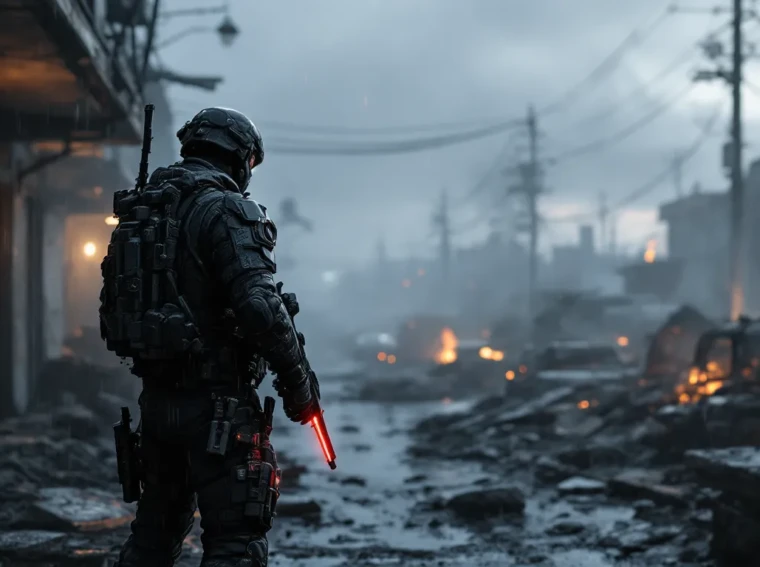
Call of Duty 2027 is shaping up to be one of the most anticipated launches in the franchise’s history. With industry insiders and community enthusiasts buzzing about potential gameplay overhauls, cutting-edge next-gen graphics, and a massive seasonal roadmap, there’s plenty to dig into before the official reveal. The franchise has spent the last few years iterating on the modern warfare formula, but 2027 feels like a turning point, rumors suggest a significant technical leap and fresh creative direction. Whether you’re a multiplayer grinder, campaign purist, or zombies devotee, this deep dive covers what we know, what’s likely, and what the community is hoping for.
Key Takeaways
- Call of Duty 2027 is expected to launch in October or November 2027 on next-gen platforms (PS5, Xbox Series X/S, and PC) with no last-gen console support, marking a significant technical departure from recent releases.
- The game features rumored gameplay innovations including enhanced environmental destruction, dynamic weather systems, redesigned weapon handling mechanics, and expanded field-of-view slider support for competitive players.
- The campaign is reportedly set in a near-future 2035–2045 scenario with a darker, espionage-thriller tone that explores AI in warfare and private military contracting, emphasizing player agency with branching narrative choices.
- Call of Duty 2027 multiplayer redesigns feature asymmetrical maps with multiple engagement distances, 50+ weapons with deep customization options, and a new Glicko-2 style ranked system designed to reduce smurfing and prioritize competitive consistency.
- The Zombies mode is being completely overhauled with mission-based objectives alongside survival rounds, five difficulty tiers, and specialist squad roles that reward team coordination and strategic gameplay.
- Next-gen optimization includes native PS5 and Series X/S development with ray-traced lighting, aggressive frame rate targets (120 FPS at 1440p), and significantly reduced load times, plus a revamped anti-cheat system addressing prior community concerns.
What To Expect From Call Of Duty 2027
Release Date And Platform Availability
Official confirmation on Call of Duty 2027’s launch window hasn’t been announced, but industry patterns suggest an October or November 2027 release, Activision’s traditional fall window. Reports from credible gaming outlets indicate the title will launch simultaneously on PlayStation 5, Xbox Series X/S, PC via Battle.net, and potentially mobile platforms through Cloud Gaming partnerships.
Activision has been quiet about last-gen console support (PS4, Xbox One). Given the technical ambitions rumored for 2027, it’s likely the title will be next-gen exclusive, marking a departure from recent releases that maintained cross-generational compatibility. This would align with how industry leaders are approaching 2027 releases, a hard technical jump.
Cross-platform play will almost certainly return, as it’s become non-negotiable for modern multiplayer shooters. Cross-progression should be standard, letting players sync their accounts across all platforms without friction.
Rumored Gameplay Features And Innovations
Several leaks and developer hints suggest Call of Duty 2027 will introduce meaningful gameplay changes beyond annual iterative updates. Rumored features include enhanced environmental destruction (more in line with other AAA shooters), dynamic weather systems affecting visibility and gunplay, and AI-driven NPC soldiers in multiplayer modes for cooperative-style experiences.
Weapon handling feels like a major focus. Early reports suggest bullet velocity, recoil patterns, and audio feedback are being redesigned for competitive clarity. TTK (time-to-kill) is reportedly being balanced more carefully to reduce frustration without sacrificing gunplay skill expression.
A potential ultimate 10 call of duty strategies should adapt to these new mechanics, but we’ll need confirmed patch notes to nail down specific recommendations. One rumor floating around the community involves expanded field-of-view (FOV) slider support on console, which would be a quality-of-life win for competitive players who feel restricted by fixed camera angles.
Campaign And Story Direction
Potential Setting And Narrative Themes
The campaign’s setting remains officially unconfirmed, but credible leakers and industry insiders hint at a near-future scenario (2035–2045 range) rather than a return to historical settings. This would position the story between Black Ops and Modern Warfare timelines, exploring emerging geopolitical tensions and emerging warfare technologies.
Rumored narrative themes include AI integration in warfare, private military contracting morality, and climate-driven conflict. If true, this would be the darkest and most thematically complex campaign the franchise has delivered in years. The tone is apparently grittier and less Hollywood-action, leaning into espionage thriller vibes.
Character development seems to be a priority. Rather than generic operators, the campaign reportedly features a smaller ensemble of deeply written protagonists with conflicting motivations. Expect moral ambiguity, not clear-cut good-versus-evil storytelling.
Developer Insights And Vision
Activision hasn’t released an official creative statement, but interviews with the development studio’s leadership suggest they’re treating 2027 as a soft reboot of the franchise’s narrative identity. The goal is to recapture why players fell in love with older campaigns (Modern Warfare 2, Black Ops) while embracing contemporary storytelling techniques.
The studio is reportedly focusing on player agency, choices in campaigns that branch the story in meaningful ways, similar to how modern action games approach narrative. Replay value is a stated priority, not an afterthought. Mission design is being scrutinized to avoid the corridor-shooter feel that plagued some recent entries.
When looking at the broader Call of Duty landscape, storytelling investment across multiplayer and campaign tie-ins is apparently stronger. The campaign won’t feel disconnected from competitive modes: shared operators, lore, and seasonal narrative arcs will bind everything together.
Multiplayer Evolution And Competitive Features
Map Design And Combat Mechanics
Map design in Call of Duty 2027 is getting a philosophy overhaul. Instead of the tight, three-lane arena design that’s dominated the franchise, leaks suggest a mix of medium-to-large asymmetrical maps with multiple engagement distances. This rewards versatile loadouts and encourages movement without punishing slower playstyles.
Environmental interaction is rumored to be expanded. Destructible cover, collapsing structures, and dynamic events mid-match could force rotations and prevent static camping positions. The goal is to keep the gunplay skill-ceiling intact while reducing “pre-aiming corners” spam.
Movement mechanics are staying familiar (slide, sprint, jump) but with refinement. Animation speed and responsiveness are apparently getting attention. Mounting, leaning, and tactical stance positioning may be enhanced or reworked to feel more natural without becoming overpowered.
Weapon Arsenal And Customization Options
Call of Duty 2027 is rumored to launch with 50+ weapons across assault rifles, SMGs, sniper rifles, shotguns, LMGs, and the ever-controversial launcher class. Weapon variety will matter competitively: no single gun should dominate across all ranges, according to design philosophies shared in interviews.
Attachment depth is apparently being preserved. Gamers love fine-tuning their loadouts, and Activision understands this. Expect hundreds of combinations across barrel length, optics, underbarrel attachments, and ammunition types. Tuning specificity, like bullets-per-second or ADS (aim-down-sight) speed, will be granular.
Balancing cadence matters here. Recent gaming industry reports show successful shooters update weapon balance weekly, not monthly. Call of Duty 2027 will likely adopt this aggressive tuning schedule to keep the meta fresh and prevent weapon-gating (where one gun is so overpowered that everyone uses it).
Progression systems are getting a fresh coat of paint. Instead of lengthy level grinds just to unlock attachments, early access to baseline builds is reportedly the philosophy. Unlock progression will feel rewarding without gating competitive viability behind playtime.
Ranked Play And Esports Integration
Esports integration is apparently a core pillar, not an afterthought. Call of Duty 2027 will launch with a robust ranked ladder, seasonal leagues, and integration with professional CDL (Call of Duty League) infrastructure from day one.
The ranked system is rumored to use a Glicko-2 style rating (similar to chess ratings) instead of simple skill tiers. This rewards consistency and competitive mentality, reducing smurfing incentives. Placement matches, promotion decay, and seasonal resets will follow industry standards.
Prizing and competitive legitimacy matter to esports viability. Reports suggest Activision is investing heavily in CDL ecosystem expansion, with more franchises and higher player salaries. If true, Call of Duty 2027 becomes the esports game for traditional console audiences.
Community spectating tools are rumored to be overhauled. Custom game servers, replay features, and built-in streaming overlays will help grassroots competitive scenes thrive. Accessibility to esports is a stated goal, not gatekeeping through expensive franchises.
Zombies Mode And Cooperative Gameplay
Evolution From Previous Seasons
The Zombies mode is getting a complete mechanical overhaul. Rather than wave-based survival exclusively, rumors suggest mission-based objectives mixed with survival rounds. Clear the map of undead, plant explosives on critical structures, or escort an NPC to extraction, variety keeps co-op fresh across a seasonal roadmap.
MapPool is apparently expanding faster than in recent titles. Instead of two maps at launch, Activision is targeting three to four unique Zombies experiences, each with distinct themes and mechanics. A reported “tropical resort” map and “underground facility” map have leaked, though names are speculation.
Difficulty scaling for groups should be more dynamic. Instead of just “normal” and “hard,” leaks suggest five difficulty tiers that scale zombie spawn rates, health pools, and special enemy types based on team size. Solos can challenge themselves: groups can coordinate complex strategies.
Progression isn’t resetting entirely. Players’ earned cosmetics, weapon blueprints, and account-level progression from Zombies should carry forward. Time investment feels respected.
Co-Op Features And Survival Mechanics
Squad coordination is being emphasized through communication tools. Pinging systems (marking zombies, objectives, loot) are rumored to be much more granular than current iterations. Call-outs without voice chat become viable.
Weapon durability and resource scarcity are apparently less punishing. Recent Zombies feedback complained about running dry on ammo mid-round. Call of Duty 2027 is reportedly tweaking drop rates and adding strategic ways to regain resources (completing objectives, killing elite zombies for bonus drops) to prevent early-game resets from bad RNG (random number generation).
Specialist roles within Zombies squads are hinted at. One player might specialize in crowd control, another in healing/support, another in high-damage output. This mirrors raid mechanics from live-service games and rewards team composition strategy.
It’s worth noting that experience the epic fusion of Diablo and Call of Duty proves Activision is willing to experiment with cross-franchise mechanics. Some speculate Zombies 2027 might borrow loot-based RPG progression (rarity tiers on weapons, stat variations) to add depth, though this is pure speculation without confirmation.
Graphics, Engine, And Technical Improvements
Next-Gen Console Optimization
Call of Duty 2027 is being developed natively for PS5 and Xbox Series X/S hardware, reportedly with no compromises for last-gen systems. This means full utilization of ray-traced lighting, significantly higher draw distances, and complex shadow calculations that feel responsive and adaptive.
Frame rate targets are apparently aggressive. 120 FPS at 1440p on Series X is rumored as the standard “Competitive” mode, with a separate “Quality” preset running 60 FPS at native 4K. This gives players agency over performance-versus-fidelity trade-offs, a luxury only possible when targeting current-gen exclusively.
Load times should be drastically reduced thanks to next-gen SSD architecture. Fast travel in campaign, instant matchmaking, and minimal map-load queuing are expected. The friction that plagued some recent Call of Duty titles is apparently being eliminated.
Haptic feedback and adaptive trigger implementation (PS5-specific features) are rumored to be thoughtfully integrated into gunplay. Weapon recoil feedback, reload click-resistance, and impact responses should make every shot feel tactile and responsive.
PC And Cross-Platform Performance
PC optimization is historically a weak point for Call of Duty ports, but 2027 is reportedly getting serious development resources. Ultra-wide monitor support (up to 32:9 aspect ratios), uncapped frame rates, and granular graphics settings should satisfy the most demanding enthusiasts.
RTX 4000-series optimization is a stated focus, with DLSS 3.5 integration (upscaling + frame generation for ray tracing). AMD players get FSR 3.1 support. This makes high-end graphics accessible across GPU manufacturers, not locked to Nvidia exclusivity.
Cross-platform progression between PC and console is essential. Battle Pass progress, cosmetics, rank, everything syncs seamlessly. PC players won’t feel second-class.
Anti-cheat is apparently being rebuilt from scratch. The current Ricochet system has had vocal critics in the PC community, so a new iteration should address detection delays and false-positive complaints. VGC recently reported that modern anti-cheat implementations are leaning toward kernel-level monitoring, which is more effective but controversial among privacy advocates. Call of Duty 2027’s approach remains unconfirmed.
Seasonal Content Roadmap And Post-Launch Support
Year One Content Expectations
Activision’s seasonal roadmap for 2027 is apparently locked in through the entire first year, with a commitment to consistent content drops every six weeks. Each season brings new multiplayer maps, Zombies experiences, battle pass cosmetics, and campaign challenges.
Season structure is rumored to adopt a “Operation” naming convention, tying into the overall campaign narrative. Rather than generic “Season 1, Season 2,” each season tells a story chapter with unique operators, weapons, and limited-time events that drive the lore forward.
Campaign DLC isn’t confirmed, but post-launch story expansions are apparently being developed. These might be smaller episodic chapters rather than massive story campaigns, think “Spec Ops” style missions that expand the universe without overcommitting development resources.
Event structure will rotate heavily. Limited-time modes, challenge weekends, and collaborative crossovers (likely with other Activision properties) are standard expectations for a live-service title. Seasonal events should feel unique and rewarding for engagement.
Battle Pass And Cosmetics Strategy
The battle pass is returning, but with tweaks to the progression curve. Early feedback on recent titles complained about grindy battle pass requirements. Call of Duty 2027 is reportedly balancing challenge difficulty so casual players can complete the pass without burnout, while competitive players have stretch goals.
Cosmeticswill cover operator skins, weapon blueprints, execution animations, and calling cards. Pricing is rumored to stay consistent ($9.99 USD for the standard pass, $19.99 for a premium tier with bonus cosmetics). Pricing transparency reduces accusations of aggressive monetization.
Weapon cosmetics deserve attention here. Blueprint variants with unique iron sights, reload animations, and audio effects will appeal to loadout enthusiasts. These won’t grant competitive advantages, purely cosmetic, but the perceived value should justify the pricing.
Crossover cosmetics are being planned with entertainment franchises. Superhero collaborations, movie tie-ins, and anime partnerships are staples of live-service shooters. Call of Duty 2027 will likely have similar partnerships, though nothing is officially confirmed beyond internal planning documents that occasionally leak.
Community Feedback And What Players Want
Addressing Pain Points From Recent Titles
Call of Duty’s last few iterations received legitimate criticism. Map design felt stale, SBMM (skill-based matchmaking) was too aggressive and burned out casual players, and weapon balance updates felt reactive instead of proactive. Call of Duty 2027 is apparently designed as a response to this feedback.
SBMM is rumored to be adjusted for public multiplayer. Competitive ranked modes will use stricter skill-based matching, but casual quickplay playlists are apparently getting looser matchmaking to allow skill-diverse lobbies. This rewards casuals with varied opponents instead of sweaty stomp-or-get-stomped scenarios.
Voice chat and toxicity are serious pain points. Call of Duty communities are notoriously toxic, and enforcement is notoriously lax. The studio is apparently implementing stronger reporting systems, quicker bans, and optional chat filters to reduce harassment. Whether this actually sticks depends on execution and moderation resources.
Performance issues and server stability were major complaints. Call of Duty 2027 is reportedly using dedicated servers with improved netcode (low-latency server-authoritative architecture). Latency and hitreg (hit registration) inconsistencies should feel less random.
Progression gatekeeping frustrated players who felt forced to grind just to unlock competitive loadouts. As mentioned earlier, Call of Duty 2027 is addressing this by allowing early access to viable weapon configurations, with progression feeling rewarding rather than mandatory.
Fan Theories And Speculation
The community’s speculation ranges from plausible to pure fantasy. One credible theory suggests Call of Duty 2027 ties into a larger Activision multiverse narrative, with Zombies, campaign, and competitive modes telling interconnected stories. This would be ambitious but aligns with live-service trends.
Some fans speculate about a potential mastering the Gulag in Call of Duty mode returning in 2027. The Gulag (1v1 arena from Warzone) was beloved, and its absence in recent multiplayer was controversial. Bringing it back, even as a limited-time mode, would please nostalgia-driven players.
Another theory involves weapon progression being tied to cosmetic blueprint unlocks. Earn currency through gameplay, spend it on cosmetic upgrades that meaningfully change how weapons feel (audio, visual feedback, animation speed). This monetizes cosmetics without affecting gameplay balance.
Speculation about return of beloved legacy maps (Nuketown, Terminal, Crash) is inevitable. Remasters tend to be safe crowd-pleasers, and Call of Duty 2027 will likely include fan-favorite maps from the franchise history. Whether they’re launch-day or seasonal additions remains unknown.
One fringe theory suggests AI-controlled opponents in custom lobbies, let players practice against smart NPCs before jumping into multiplayer. This would lower the skill barrier for beginners and add PvE variety for players wanting more than pure PvP. It’s speculative, but not impossible.
The rumor mill also suggests unlock benefits with the Call of Duty Endowment Pack might expand into 2027, with cosmetics tied to charitable causes. Activision’s veteran support initiative has been integrated into recent titles, and continuing that social mission feels aligned with the studio’s public statements.
Conclusion
Call of Duty 2027 shapes up to be a pivotal release, less an incremental update and more a recalibration of what modern Call of Duty can be. From campaign storytelling ambitions to competitive infrastructure overhauls, from next-gen technical leaps to post-launch content commitments, the framework for a genuinely exciting release is in place.
That said, leaks and rumors are exactly that: unconfirmed information until Activision makes official statements. Hype should be measured. The studio has disappointed before, and execution matters infinitely more than pre-launch promises. Balance changes could be misjudged, server stability could falter at launch, content timelines could slip.
But if even half of these rumors pan out, gamers have legitimate reasons to be optimistic. The franchise is listening to what players want and building accordingly. Keep eyes on official announcements from Activision and credible gaming media. When Call of Duty 2027 finally launches, it’ll either deliver on this promise or become another cautionary tale. Either way, the ride should be worth paying attention to.