
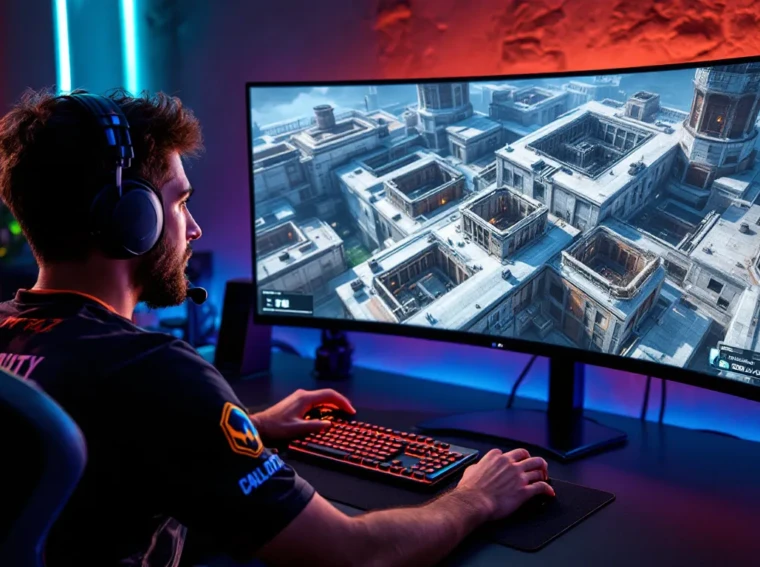
Alcatraz is one of the most unforgiving and exhilarating maps Call of Duty has ever delivered. Whether you’re dropping in for the first time or you’ve been grinding this legendary prison island since its debut, understanding every corner, every escape route, and every loadout nuance will separate you from the pack. This isn’t a casual stroll, Alcatraz demands quick decision-making, map awareness, and the kind of weapon knowledge that only comes from serious playtime. By the end of this guide, you’ll have the intel you need to survive the chaos, dominate multiplayer engagements, and push deep into high-round zombie runs. Let’s break down everything that makes Alcatraz the most intense battleground in the Call of Duty arsenal.
Key Takeaways
- Call of Duty Alcatraz’s compact, high-intensity design demands quick decision-making and map awareness to dominate fast-paced close-quarters engagements within 20-30 meters.
- Master key locations like the Main Prison Block, Guard Towers, Cafeteria, and Dock areas to control power positions and create winning team rotations.
- Use fixed weapon spawns strategically—Power Generation room for assault rifles and SMGs, the dock for sniper rifles, and the cafeteria for tactical rifles—to anticipate enemy loadouts.
- Consistent team communication with simple callouts, stacked defensive positions, and coordinated flanking prevents isolation and ensures squad dominance in objective modes.
- High-round Zombies survival on Alcatraz requires prioritizing the power switch by round 2-3, training zombies in the cafeteria, and mastering resource management over engagement distance.
- Pre-aim common angles, vary your repositioning patterns, and leverage sound cues to outplay opponents who rely on predictable tactics or tunnel vision during gunfights.
What Is Call of Duty Alcatraz?
Call of Duty Alcatraz is a compact, high-intensity map centered around the infamous San Francisco Bay prison. The map originally gained prominence in Call of Duty: Black Ops 4’s Blackout battle royale mode as a late-game final circle location, then returned in modern iterations as a multiplayer and zombies battleground. It’s designed for close-quarters combat with vertical gameplay elements that reward players who understand positioning and sightlines.
What makes Alcatraz special isn’t just its historical theming, it’s the map’s inherent aggression. There’s nowhere to hide for long. Engagements happen fast, often within 20-30 meters, and whoever adapts quickest to shifting power positions wins. The map features multiple cell blocks, guard towers, and watchtowers that create layered gameplay opportunities. Teamwork and communication become critical because a single miscommunication often means your squad gets flanked and eliminated. Unlike sprawling battle royale maps, Alcatraz forces constant engagement, making it ideal for players who thrive on adrenaline and quick reflexes.
Map Overview and Layout
Key Locations and Landmarks
Alcatraz breaks down into several distinct zones, each with its own tactical identity.
Main Prison Block is the heart of the map. It contains multiple corridors with tight sightlines, making it a sniper’s nightmare and an SMG player’s dream. The interior is maze-like with numerous cells that provide cover but also create dead ends, familiarity with the layout is essential to avoid getting trapped.
Guard Towers sit at the map’s perimeter and offer elevated vantage points. These are high-value real estate in multiplayer modes where controlling height advantage matters. But, towers are exposed routes for predictable players: aggressive teams use them as bait to draw out campers.
Cafeteria Area represents open ground in the map’s center. This is where teams collide head-on. There’s limited cover, making it dangerous for slow players but rewarding for those with fast TTK (time-to-kill) weapons like assault rifles or SMGs.
Dock/Escape Area sits on the water’s edge. This zone features shipping containers, wooden structures, and narrow walkways. It’s easy to get flanked here, but it’s also an excellent rotation point for teams playing for positioning.
Power Generation Room is tucked away and often overlooked in early game. It contains weapon crates and power-up spawns, making it worth a quick detour if you’re nearby.
Defensive Positions and Cover
Alcatraz’s cover system revolves around breakable walls, reinforced structures, and natural sight blockers. Unlike maps with abundant sandbags and barriers, Alcatraz uses the prison architecture itself as cover.
Best defensive spots include the interior cell block corridors where you can hold two entrance points simultaneously. Stack your team in these hallways and you’re nearly impossible to dislodge without grenades or tactical strikes. The problem: teammates can accidentally block each other’s sightlines, so positioning matters even more.
Tower interiors offer strong hold positions for one or two players. Control a tower and you force enemies to either assault from below (difficult) or abandon the zone entirely. The weakness is clear: a single coordinated push from multiple angles collapses your position fast.
Container stacks near the dock create layered cover with multiple firing angles. This is ideal for players who like maintaining mobility while staying protected. It’s harder to hold long-term compared to interior positions, but it’s excellent for cutting off enemy rotations.
Gameplay Mechanics and Features
Escape Routes and Movement Strategies
Alcatraz’s compact nature means escape routes are limited but critical. The map has three primary exit zones: the dock area where boats spawn, the main prison exit to the east, and the watchtower access point to the north.
In multiplayer modes, controlling one of these exits often determines win conditions. Teams that own an escape route can reposition without being cut off, whereas teams forced to fight through contested areas bleed kills and positioning advantage.
Movement on Alcatraz rewards aggressive pushing. Holding static positions works temporarily, but the map’s size means rotations happen every 20-30 seconds. Players who master the rhythm of “push, hold, rotate” will consistently outplay those who camp.
For snipers, rooftop movement provides unique angles. But, you’re exposed during transit, so this only works if your team controls the ground below you. Ultimate 10 Call of Duty Strategies covers this in more depth for those wanting advanced movement tactics.
A key mechanic many players miss: you can use the environment to bait grenades and special abilities. Enemy throws a Molotov at your corner? Move laterally and they waste it. This kind of psychological gameplay separates veterans from casuals.
Weapon Spawns and Loadout Recommendations
Weapon spawns on Alcatraz are fixed and generous. The Power Generation room guarantees an assault rifle or SMG spawn. The dock area spawns sniper rifles. The cafeteria usually has a tactical rifle or LMG. Knowing these spawns means you can anticipate enemy loadouts based on where they’re dropping.
Custom loadouts matter immensely on this map. Since engagement distances rarely exceed 40 meters, your loadout should reflect that reality. Sniper rifles are viable but require serious skill to manage with the map’s CQB focus. Assault rifles with tight hip-fire spreads dominate the meta currently. SMGs are devastating in the corridors but struggle in open areas like the cafeteria.
For best results, carry one primary weapon tuned for your engagement style and lethal grenades. The map’s confined spaces make grenades exceptionally powerful. A well-placed frag can clear an entire corridor.
Multiplayer Mode Strategies
Team Coordination and Callouts
Alcatraz’s tight layout makes communication non-negotiable. Every squad needs clear callouts for each zone. Use simple, one-word identifiers: “Main Block,” “East Tower,” “Dock,” “Cafeteria.” When a teammate calls contact, everyone knows exactly where to funnel or rotate.
Positioning as a unit is critical. Don’t let teammates get isolated. Assign zones and enforce them. If someone gets picked off in a contested area, the rest of the team should either support them immediately or pull back. Dying players who weren’t supported by teammates usually indicates a communication breakdown.
Most high-ranked Call of Duty teams use a three-man stack holding power positions with one or two players monitoring rotations. This creates a mobile defense that can reposition faster than scattered teammates.
Callouts should also include enemy counts and remaining health. “Two enemies in Main Block, one low health” is infinitely more useful than “enemies in Main Block.” This precision transforms your squad from reacting to controlling.
Objective-Based Gameplay
In objective modes like Domination, Control, or Search and Destroy, Alcatraz becomes almost chess-like. Flag positions are predictable because the map’s size limits viable objective placement. Teams fight for consistent positions, not surprising rotations.
For Domination, controlling the flag in the cafeteria or prison interior is essential because those zones offer natural defensive advantages. Teams that hold these early usually win because they force enemies into predictable assault routes.
Search and Destroy favors teams with superior coordination. Bomb plant sites are obvious (cafeteria for B site, dock for A site in most configurations). Post-plant defense is easier here because the map’s corridors funnel attackers into killzones. Smart defenses stack defenders in hallways leading to the bomb and maintain flanking positions to catch rotates.
In objective modes, utility abilities matter more than gunplay sometimes. Deploying your tactical equipment to cut off sightlines or suppress enemy advances often decides rounds more than headshots do.
Zombies Mode on Alcatraz
Wave Progression and Survival Tips
Zombies on Alcatraz differs from traditional round-based survival. The mode starts aggressive and escalates quickly. By round 5, you’re facing consistent zombie pressure with minimal breathing room. The map’s confined spaces amplify this because there’s nowhere to escape if hordes trap you.
Early game strategy focuses on training zombies in open areas (cafeteria works well) while training your weapon. Don’t rush to open doors or buy perks. Build ammo reserves first. The power switch is located in the Power Generation room, prioritize reaching it by round 2-3 to unlock teleports and wall weapons.
Use the dock area for running trains (training zombies in circles while shooting). The open space prevents hordes from cornering you. As rounds progress, but, trains become riskier because spawn rates intensify. Transition to holding defensive positions once spawns get overwhelming.
Perk priority: Jug (health buffer) first, Speed Cola (reload speed) second, Double Tap (increased fire rate) third. This stagger prevents you from being forced into bad situations before you have essential defensive tools.
Weapon acquisition is critical. Wall weapons are weak: prioritize the mystery box or buying Wonder Weapons when available. The Ray Gun (if it spawns) is a lifesaver for mid-round hordes.
High-Round Strategies and Easter Eggs
High-round play on Alcatraz requires exploiting zombie spawning mechanics. Zombies spawn from specific locations on the map. Understanding these spawn points lets you manipulate where hordes appear, giving you time to kite and reposition.
The cafeteria becomes your primary holding area for high rounds. Stack your squad in corners, maintain clear sightlines, and use Wonder Weapons strategically. Don’t waste Ray Gun ammo on early hordes, save it for critical moments.
Mastering the Gulag shares similar high-pressure survival concepts that translate directly to Alcatraz zombies. The core principle is consistent: control positioning and manage resources relentlessly.
Easter Eggs on Alcatraz tie into the prison theme. Some require activating hidden switches in specific sequences. These aren’t mandatory for survival but completing them unlocks benefits like extended power and temporary spawning pauses. Since Easter Eggs require time and coordination, attempt them only when your squad has secured dominant positions and wave progression is manageable.
Best Weapons and Loadouts for Alcatraz
Assault Rifles and SMGs
The AK-74 and FFAR 1 dominate the current meta for assault rifles. The AK-74 offers superior damage per shot with acceptable recoil patterns, making it punishing in skilled hands. The FFAR 1 compensates with higher fire rate, trading some damage for consistency. Both excel in the 15-35 meter range that defines most Alcatraz engagements.
Attach a 5.56 NATO rounds magazine (extended capacity), vertical foregrip (recoil stabilization), and a 2x-4x scope for versatility. This setup handles corridor combat without sacrificing mid-range effectiveness.
For SMGs, the LCPD 4.5 and Jackal PDW are absolute beasts. The LCPD 4.5 prioritizes TTK (time-to-kill) with minimal visual recoil. The Jackal PDW trades slight TTK for superior handling and mobility. In the prison’s tight corridors, either melts enemies in under 300 milliseconds.
Equip an extended magazine, Operator foregrip, and tactical stock. This combination maximizes fire rate without compromising ADS (aim down sights) speed, essential when engagements happen around corners.
Pair your primary with a pistol rather than a secondary weapon. The extra mobility helps you reposition faster between engagements. Most duels on Alcatraz are decided by who repositions better, not who has a backup weapon.
Sniper Rifles and Tactical Options
Sniper rifles are niche on Alcatraz but viable for experienced players. The LW3A1 Frostline one-shots at any range and rewards pre-aim discipline. If you’re confident in your positioning and teammate support, snipers control sightlines other players can’t challenge.
The catch: Alcatraz’s CQB nature means you’re vulnerable when sightlines break. Always have teammates covering your reload and flanks. A sniper without support dies to a single coordinated push.
Tactical rifles like the EM2 function as hybrid weapons. They two-shot reliably at range but handle close quarters better than bolt-action snipers. Use them if you want sniper range flexibility without pure commitment.
For support roles, launchers and LMGs provide suppressive fire. The GPMG-7 LMG with extended magazines can suppress entire corridors, forcing enemies into unfavorable positions. It’s not for eliminating players but controlling space, teams with competent LMG players deny enemy pushes effectively.
Common Mistakes to Avoid
Playing predictably is the fastest way to get destroyed on Alcatraz. If you hold the same corner every engagement, experienced players will pre-aim that exact spot. Rotate unpredictably. Sometimes hold aggressively: other times pull back to bait them forward. Vary your routes to objectives. Unpredictability forces enemies into guessing games they’ll lose.
Ignoring grenades is another killer. Throwable equipment is exponentially more powerful on Alcatraz than other maps because there’s limited space to escape. A single frag in a corridor can eliminate multiple enemies. Always assume enemies have grenades and adjust your positioning accordingly. Never bunker into a corner without an escape route.
Overextending without teammates gets you isolated and picked off. The map punishes solo players ruthlessly. Even the most skilled player dies fast when flanked by a coordinated pair. Stick with your team. If you’re playing without voice comms, ping heavily and watch minimap.
Neglecting headshot positioning is massive. Headglitches (positions where your head is exposed but your body is protected) are everywhere on Alcatraz. Learn them. Position your peek so enemies see only your head when you’re aiming at their chest. This advantage compounds in duels.
Tunnel vision during gunfights causes deaths to flanking enemies. Stay aware of multiple sightlines. If you’re trading shots with one enemy, assume another is rotating to your position. Break sightlines quickly or pre-position teammates to cover flanks.
Wasting special abilities early is a mistake many casual players make. Save your Scorestreaks and tactical equipment for objectives or decisive moments. Using a UAV to scan a dead zone is inefficient, save it for pushing objectives when you need every advantage.
Pro Tips for Dominating Alcatraz
Map knowledge is everything. Spend 5-10 matches learning spawn points, weapon locations, and perk machine positions. Know exactly where to find ammo mid-round and which routes avoid unnecessary engagement. Veterans of Alcatraz know the map so intimately they can navigate blindfolded. That familiarity translates to faster decision-making under pressure.
Pre-aim common angles. As you approach areas where enemies likely hold, aim at head level at those spots before peeking. If you’re aiming first, you’ve already won the gunfight. This is especially critical in Alcatraz where engagements are lightning-fast.
Use sound cues aggressively. Footsteps are loud and directional on Alcatraz. Listen for them constantly. Enemy footsteps tell you where they’re moving, how many there are, and whether they’re pushing or retreating. Invest in good headphones: it’s worth it.
Vary your engagement distances. Some players become predictable by always holding the same range. Master fighting at 15 meters with SMGs, then at 30 meters with assault rifles, then at 50+ meters with tactical rifles. This versatility prevents enemies from countering your playstyle.
Respect the peeker’s advantage. In online play, the player peeking (moving into view) has a split-second timing advantage. Account for this by pre-aiming aggressively and positioning where you’re not surprised by aggressive peeks. Counter-peek or hold a wider angle.
Play for the next gunfight, not the current one. After winning a duel, reposition immediately. Don’t stay in the spot where you just killed someone, enemies respawn nearby and they know where to look. Win a fight, rotate immediately, get to high ground, and prepare for the next engagement.
Communicate your deaths. Even in solo modes, understanding where you died matters. Did you get flanked? Headshot from distance? Out-trained? Learn from each death and adjust strategy. Most players just respawn and repeat the same mistake. Don’t be that player.
Stack with skilled teammates. Solo queuing gets old. Find a consistent squad and grind together. Squad chemistry compounds. You learn each other’s playstyles, predict rotations, and win consistently. Resources like The Loadout and Dexerto maintain community Discord servers where you can find teammates at your skill level.
Watch pro gameplay. Study how esports pros handle Alcatraz. They’re not just mechanically skilled, their positioning and decision-making are flawless. Observing high-level play reveals nuances you’d take months to discover yourself. Twinfinite regularly covers pro strategies worth studying.
Experiment with different loadouts. Don’t get locked into one setup. Test sniper rifles, tactical rifles, LMGs, and weapon combinations. Understanding multiple playstyles makes you unpredictable and helps you adapt when your preferred loadout gets banned or nerfed.
Conclusion
Alcatraz represents the pinnacle of intense, skill-rewarding gunplay in Call of Duty. It strips away filler and forces pure competition where positioning, communication, and gunskill determine winners. Whether you’re grinding multiplayer for Camo unlocks, pushing high rounds in Zombies mode, or competing in esports tournaments, the fundamentals remain constant: know the map, coordinate with teammates, manage your loadouts intelligently, and adapt relentlessly.
Start with these strategies, invest time learning sightlines and spawns, and most importantly, Discover the Exciting World of Call of Duty Heroes and other competitive titles to expand your overall gaming portfolio. The skills you develop on Alcatraz transfer across the entire franchise. Your next victory is waiting, drop in prepared, stay sharp, and dominate.