
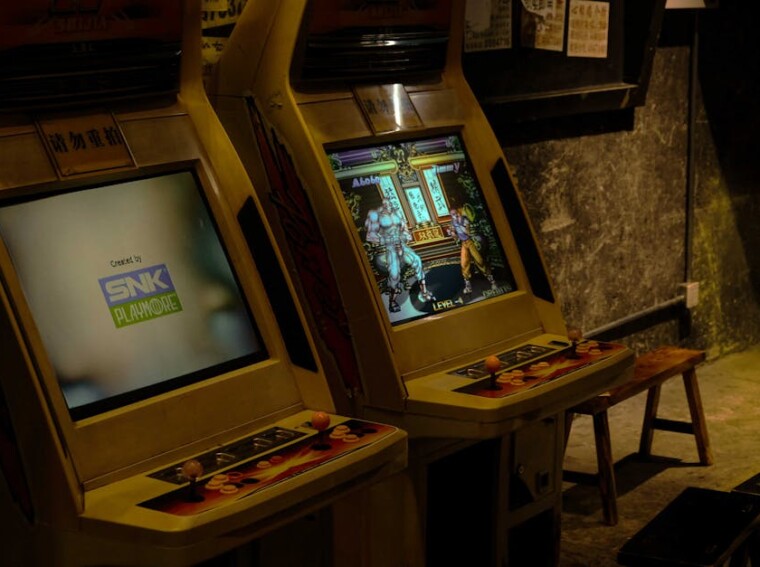
If you’ve ever felt the satisfying snap of landing a perfect combo or the adrenaline rush of a frame-perfect cancel into a special move, you know there’s something timeless about old school fighting games. These arcade-born classics didn’t just entertain, they fundamentally shaped how combat gaming works today. From the pixel-perfect timing required in Street Fighter II to the over-the-top violence of early Mortal Kombat games, these titles created the template that modern fighting games still follow. Whether you’re a competitive player hunting for deeper gameplay mechanics or a casual gamer curious about gaming history, understanding the foundations of old school fighting games is essential. They’re where the genre’s DNA was written, and that legacy isn’t going anywhere.
Key Takeaways
- Old school fighting games established the mechanical foundation and esports infrastructure that modern competitive gaming still relies on today, proving that accessibility and infinite depth are not mutually exclusive.
- Street Fighter II perfected the fighting game template by introducing character balance, responsive inputs, and the special move system that became the industry standard, while Mortal Kombat dominated culturally through its fatality system and dark aesthetic.
- Frame data and tight input windows are the core skill barriers in old school fighting games, requiring players to master combo timing, move prioritization, and punishment—mechanics that remain essential for competitive success today.
- You can legitimately access classic fighting games through emulation platforms like MAME and Fightcade 2, official re-releases, or console ports, making these arcade classics more accessible now than at any point since the 1990s.
- Old school fighting games teach pure mechanical fundamentals faster than modern fighters due to reduced visual noise and simpler move sets, making them superior practice tools for mastering spacing, neutral game, and execution precision.
- The dedicated community preserving these titles through online tournaments, local fighting game communities, and competitive events proves that timeless mechanical design transcends hardware limitations and continues evolving decades after release.
What Are Old School Fighting Games?
Old school fighting games refer to combat-focused arcade and early home console titles that emerged primarily between the 1980s and 1990s. These games placed two or more characters in direct one-on-one (or group) combat scenarios with an emphasis on mechanical skill, timing, and memorization of move inputs. The category encompasses everything from the straightforward pugilism of early boxing games to the complex, multi-system juggle combos that defined late-era arcade fighters.
What makes a fighting game “old school” isn’t just age, it’s a specific design philosophy. These games rewarded precision and punishment. They didn’t hold your hand with extensive tutorials or rebalance characters every two weeks. Input windows were tight, combos required exact timing, and learning your character meant grinding hours in practice mode or at the arcade cabinet. The stakes felt real, especially when you were feeding quarters into a machine and competing against other players.
The genre’s early definition centered on street-level martial arts combat (thanks to the 1987 fighting game boom), but it quickly expanded to include weaponized fighters, super-powered special moves, and increasingly absurd character designs. By the 1990s, “old school fighting games” had become a broad category encompassing everything from realistic boxing simulations to games where fighters hurled fireballs and summoned demons.
The Golden Era of Arcade Combat
The Street Fighter Revolution
Street Fighter II (1991) didn’t invent fighting games, but it perfected them. Capcom’s masterpiece took the one-on-one combat concept and refined every element: character balance, input responsiveness, visual clarity, and most importantly, depth. The game featured eight selectable characters (later expanded to twelve with updates like Champion Edition and Turbo), each with distinct move sets and playstyles.
SF II introduced the modern fighting game template: normal attacks, special moves accessed through quarter-circle motions and button combinations, super meter management, and rounds structured around health bars and time limits. The hadoken became gaming’s most recognizable special move, and learning to throw one as Ryu or Ken was a rite of passage for arcade-goers. The game’s balance wasn’t perfect, certain matchups heavily favored specific characters, but the meta evolved quickly. Players discovered frame traps, priority systems, and techniques like focus attacks (well, eventually).
Street Fighter II’s arcade success translated directly to home consoles, and its various revisions (Champion Edition, Turbo, Super, Ultra) created an unprecedented level of competitive discourse. The game’s legacy extends beyond nostalgia: modern fighting game engines still borrow heavily from SF II’s fundamental structure.
Mortal Kombat’s Cultural Impact
While Street Fighter II dominated the competitive scene, Mortal Kombat (1992) dominated the cultural conversation. Midway’s digitized-sprite fighter brought unprecedented violence, gore, and dark humor to the genre. The fatality system, devastating finishing moves tied to specific button inputs and ranges, became a cultural phenomenon that transcended gaming.
Mortal Kombat’s aesthetic deliberately contrasted with SF II’s martial arts tradition. Where SF II was disciplined and tactical, MK was visceral and chaotic. The game featured fewer characters (seven select-ables plus Shao Kahn) but compensated with personality and gimmicks. The Pit stage with its deadly spikes below the fighting arena symbolized MK’s willingness to embrace danger in ways SF II didn’t.
The series’ violence attracted regulatory scrutiny that actually helped its marketing, the ESRB’s creation was directly influenced by Mortal Kombat’s controversy. From a gameplay perspective, MK’s combo system was less intuitive than SF II’s, with less consistent canceling and move linking. But the game’s charm came from its tournament-viable depth hiding beneath the gory surface.
Other Iconic Franchises That Shaped the Genre
Beyond the “Big Two,” several franchises carved out niches and contributed essential innovations. The King of Fighters series (SNK, starting 1994) introduced the tag-team system where you cycled through three characters during a single match, creating new strategic possibilities. Later entries added brutal boss characters and progressively tighter frame-data mechanics that pushed the arcade fighting game engine to its limits.
Capcom vs. SNK (2000) became the crossover that fighting game fans never knew they wanted, merging SF II’s mechanics with KOF’s cast and groovy soundtrack. Tekken (Namco, 1994) embraced 3D polygonal graphics before most fighters, creating a completely different button layout and movement system that felt genuinely distinct. Guilty Gear (Arc System Works, 1998) pushed hand-drawn animation and special move effects into territory that made even arcade purists pause.
Each franchise developed its own philosophy: SNK’s games favored aggressive, resource-heavy gameplay: Capcom’s leaned toward technical, meter-conscious spacing: Tekken’s featured movement-heavy, juggle-combo-focused combat. This variety meant that “old school fighting games” wasn’t a monolith, it was a rich ecosystem of mechanical approaches.
Key Mechanics That Made Old School Fighting Games Legendary
Combo Systems and Frame Data
Frame data is the heartbeat of fighting game mechanics. Every animation, from a standing light punch to a spinning kick recovery, occupies a specific number of frames. In a 60 FPS game, one frame lasts approximately 16.67 milliseconds. Landing a move that’s +5 on block means the defending player has a five-frame disadvantage, barely enough time to throw a light attack before getting stuffed.
Old school fighting games introduced players to this concept through pure trial and error. You’d learn that after Ryu’s shoryuken connected on hit, you had roughly 15 frames to input your next move. Combos weren’t programmed shortcuts: they were exploits of frame advantage. The most fundamental combo was a block string, a sequence of normal attacks strung together so quickly that blocking didn’t create enough recovery time to counter-attack.
As the arcade era progressed, combo systems evolved from simple hit-confirms to elaborate juggle combos where launching moves sent opponents airborne, allowing follow-up strikes before they could recover. SNK’s fighters became notorious for juggle-heavy gameplay where a single mistake could result in a character losing 60% health before touching ground. This created both exciting highlights and frustrating scenarios where comebacks felt nearly impossible.
Special Moves and Input Commands
The hadoken’s quarter-circle-forward motion became the standard for special move inputs, but early fighting games experimented wildly. Some used button combinations, others used motions that seemed random until muscle memory kicked in. Shoryuken used a forward-down-down-forward motion (a “Z” pattern), which became gaming’s most iconic invulnerable move.
Input windows in old school games were notably strict. Land your quarter-circle input 20 frames too late and you’d get a regular attack instead of your special. This wasn’t poor design, it was intentional difficulty. Competitive players had to practice hundreds of repetitions to execute moves reliably under pressure. The mental load of input execution was part of the skill expression.
Special moves functioned as risk-reward tools. A shoryuken was fast and invulnerable on startup, but if it whiffed or got blocked, the recovery left you vulnerable. This created mind games around move baiting and punishment. Learning to block a shoryuken on reaction and punish with a throw became a core competitive skill.
Character Variety and Unique Playstyles
Old school fighting games rose or fell based on character diversity. Street Fighter II’s eight characters each played fundamentally differently. Zangief was a grappler with powerful throws and command grabs. Dhalsim was a zoner who stayed fullscreen with fireballs and stretching limbs. Guile played a pure defensive counterpicking game with his sonic boom and flash kick.
This variety wasn’t cosmetic, it required players to learn multiple gameplans. A rushdown-focused character like Ken would win or lose based entirely on footsie control and combo confirms in close range. A character like Blanka had to pressure opponents with unpredictability and chip damage, accepting worse damage output for better chip percentage. The game’s balance forces meant that no character could excel at everything: they had distinct windows of strength and weakness.
Mortal Kombat’s character roster featured less differentiation in core mechanics but made up for it through character-specific innovations. Some fighters had projectile weapons, others relied on command grabs or low-hitting specials. The game’s speed was intentionally slower than SF II, giving more time for players to react to mix-ups and create mental games around frametraps.
The Most Essential Old School Fighting Game Titles to Play
Street Fighter II and Its Iterations
Street Fighter II (arcade, 1991) is the non-negotiable starting point. The arcade original shipped with eight characters and relatively loose balance that would haunt competitive play: Blanka and Guile were borderline broken in Champion Edition and onwards. Even though balance issues, the game’s mechanical foundation was revolutionary. Input responsiveness felt snappy, animations read clearly, and the game’s difficulty curve welcomed new players while offering infinite depth for competitive grinders.
Capcom released multiple revisions:
- Champion Edition (1992): Added new characters and tightened the engine.
- Street Fighter II Turbo (1992): Increased game speed and updated move properties.
- Super Street Fighter II (1993): Refined balance and added T. Hawk and Dee Jay.
- Super Street Fighter II Turbo (1994): The “final” version with the tightest frame data and most balanced competitive meta.
If you’re learning SF II today, Super Turbo is the preferred version for competitive play, though the original arcade version remains historically significant. The game’s availability varies, emulation through MAME remains the most accessible route, though legally questionable. Some console versions exist, but their input latency can feel sluggish compared to arcade or proper emulation setups.
Mortal Kombat 1-3: The Trilogy That Started It All
Mortal Kombat (1992) introduced the series’ signature violence and fatality system. The game’s roster was smaller than SF II, featuring Sonya Blade, Liu Kang, Johnny Cage, and others defined by specific gimmicks. The uppercut fatality became iconic, and stage hazards like the Pit’s spikes added environmental storytelling.
Mortal Kombat II (1993) massively expanded the roster, added new fatalities, and refined the engine’s responsiveness. This was the peak of MK’s arcade dominance, players debated Kung Lao’s infinite combos and Sonya Blade’s broken throws with religious fervor. MK II’s gameplay felt more chaotic than SF II, which appealed to players who found SF II’s footsie-heavy approach too cerebral.
Mortal Kombat 3 (1995) introduced run buttons and command-based dashing, shifting the game’s pace dramatically. The roster featured new characters and removed others (controversial decisions that fans still debate), but the run mechanic created new combo possibilities. MK3’s balance was messier than MK II, but the gameplay fundamentals held up.
All three titles are available through emulation or various compilation releases. MK II remains the most balanced and beginner-friendly of the trilogy.
The King of Fighters and SNK’s Legacy
The King of Fighters ’94 (SNK, 1994) introduced the tag-team system where players select three characters and cycle between them mid-match. Each character had a power meter (similar to SF II’s super meter) that built through successful attacks and block damage. This created strategic depth around meter management across three fighters.
SNK’s arcade hardware was weaker than Capcom’s, so animations were choppier and sprite work less detailed. But SNK compensated through aggressive frame-data tuning, their games were fast. Combos were juggle-heavy, and staying in the air was often safer than landing and resetting. Players had to adapt their fundamentals accordingly.
The King of Fighters series continued annually through the 90s, each iteration refining the tag system and balancing the growing roster. KOF games were the standard in competitive tournaments throughout the late 90s, especially in Japan and Korea. Playing KOF taught you a completely different set of neutral game principles compared to SF II’s spacing-heavy approach.
Capcom Vs. SNK and Other Crossover Classics
Capcom vs. SNK (2000) merged SF II’s mechanics with KOF’s roster and character designs. The game featured a “ratio” system where characters were assigned point values, allowing players to build 4-point teams with two weak characters or 2-point power selections. This created novel team-building strategics unavailable in pure 1v1 fighters.
The game’s announcement system told players what moves opponents had selected before the round started, creating psychological warfare around predictable patterns. CvS became a legitimate esports title in early 2000s arcades, though it never reached SF II or KOF’s competitive penetration.
Other crossover titles like Marvel vs. Capcom (1998) introduced assist characters that changed the fundamental game engine, while Street Fighter Alpha series brought the custom combo system that allowed instant canceling of any move into any other move, creating wild new possibilities that tournament players are still discovering.
Accessing these titles requires emulation or tracking down used arcade cabinets and console versions. Old School Gamerawr: A Nostalgic Jump into Gaming History has comprehensive guides to finding and playing classic fighting games through legitimate channels.
Why Old School Fighting Games Still Matter Today
The Esports Foundation They Created
Modern esports was built on the foundation that old school fighting games established. The arcade tournaments of the 1990s created the template for competitive gaming: brackets, prize pools, spectators, and a clear path from casual player to professional competitor. Street Fighter II’s simplicity (pick a character, win matches, advance) was deceptively brilliant from a spectator perspective.
Early fighting game tournaments attracted massive crowds precisely because the skill expression was visible and understandable. A casual viewer could recognize when a player landed a perfect combo or made a crucial tech decision. Compare that to strategy games where victory conditions involve invisible information and meta-game decisions, fighting games remain inherently watchable.
The esports infrastructure that competitive gaming relies on today, sponsorships, team organizations, broadcast partnerships, traces directly to fighting game communities that organized tournaments with minimal corporate backing. Games like Street Fighter: The Esports Major and modern Tekken World Tours show that old school fighting game formats still drive legitimate esports viewership.
Influence on Modern Fighting Game Design
Every contemporary fighting game that you play carries DNA directly inherited from old school design. The meter system, the special move input commands, the concept of frame-advantage, these weren’t universal gaming concepts until SF II proved their viability. Modern fighters like Guilty Gear Strive, Street Fighter 6, and Tekken 8 all use fundamentally similar mechanical structures.
Even “innovative” modern games rarely escape the old school template. Wall mechanics in Tekken? An extension of combo juggling. Roman Cancels in Guilty Gear? A souped-up version of alpha counters. The sheer efficiency of the fighting game formula means that developers keep refining it rather than replacing it.
Competitive balance has evolved, modern games receive regular patches that would’ve been unthinkable in the arcade era, but the fundamental skill expression hasn’t changed. You still win by confirming combos into damage, controlling neutral space, and punishing mistakes. The core loop is identical.
The Dedicated Community Keeping Classics Alive
Old school fighting games remain genuinely playable because communities refuse to let them die. Competitive players still compete in Street Fighter II Turbo, King of Fighters, and other arcade classics at events like EVO (now Evolution Championship Series), where side tournaments dedicated to legacy games attract serious competitors.
Online emulation platforms like MAME and rollback netcode implementations have extended the lifespan of games that would’ve otherwise disappeared. Projects like Fightcade 2 specifically focus on preserving arcade fighters through community-run netplay, allowing players worldwide to compete in classic titles with modern online infrastructure.
This isn’t nostalgia tourism, competitive players genuinely prefer some old school games to modern alternatives. Street Fighter II remains mechanically superior to many newer games for pure fundamentals practice. The lower input lag and reduced visual clutter compared to modern effects-heavy fighters makes it an ideal learning tool. Competitive communities recognize that old school fighting games taught core concepts that newer players often skip.
How to Get Started Playing Old School Fighting Games
Emulation and Legal Ways to Access Retro Titles
Finding authentic arcade cabinets of old school fighting games is impractical for most players, they’re expensive, space-intensive, and increasingly difficult to maintain. Emulation through MAME (Multiple Arcade Machine Emulator) remains the most accessible path, though you’ll need to source ROM files (which exist in a legal gray area).
Console versions offer legitimate alternatives. Street Fighter II was released on SNES, Genesis, and numerous other systems, quality varies wildly, but the SNES and Genesis versions are reasonably playable. Mortal Kombat compilation releases exist on modern platforms. But, be aware that many console ports had significantly worse input lag than arcade originals, making them inferior for serious practice.
SNK’s official emulation through SNK Heroines, King of Fighters collections on modern platforms, and various digital re-releases provide legally clean paths to classic titles. Quality is uneven, but they’re legitimate options. Check that any version you purchase includes proper netcode support, older ports with poor rollback netcode will frustrate you.
The emulation purist stance is straightforward: if you can’t buy it legally, running MAME ROMs is acceptable preservation. The arcade era is essentially dead commercially: most old games aren’t generating revenue anyway. That said, supporting official re-releases encourages publishers to bring more classics back.
Learning the Fundamentals as a New Player
Old school fighting games are brutal to newcomers. There’s no difficulty setting that softens the punishment, no AI that learns your patterns. You’ll lose consistently until muscle memory develops and pattern recognition clicks.
Start with Street Fighter II, it remains the gold standard teaching tool. Ryu or Ken are ideal starting characters because their move sets are simple and their gameplay principles translate to other fighters. Learn these fundamentals in order:
- Normal attacks: Master hitting opponents at various ranges without relying on special moves.
- Block timing: Understand when to block standing versus crouching. Low-hitting moves require crouch blocking: overheads require standing.
- Special move execution: Practice your hadoken, shoryuken, and spinning kick in isolation until they’re automatic.
- Punishing unsafe moves: When opponents throw out moves carelessly, learn to capitalize with throws or your fastest attack.
- Combo confirms: Link two or three hits into a special move, the foundation of damage output.
Spend hours in practice mode before challenging human opponents. Old school games don’t coddle you, if you’re not executing properly, you’ll recognize it immediately through dropped combos and whiffed specials.
Building Your Skills and Finding Competitive Communities
Once fundamentals are solid, move to online play through Fightcade (which runs most SNK and Capcom arcade fighters with rollback netcode) or console versions with good netcode. Playing humans immediately exposes gaps in your game, you’ll learn new mixing patterns, unsafe move usage, and the mental game around conditioning opponents.
Dot Esports provides competitive guides specific to classic fighting games, including matchup breakdowns and optimal strategies. These resources help you understand why certain players make specific decisions in high-level play.
Local fighting game communities exist in most major cities, check Discord servers or Reddit communities for your region. Many FGCs maintain weekly “locals” where you can play arcade-faithful emulated versions against serious competitors. The feedback loop of losing to better players is essential for improvement.
Tournaments remain the ultimate proving ground. Starting with online tournaments (many communities run Fightcade-exclusive brackets) lets you test your skills without travel. Progressing to in-person events puts you against the current best players and shows you exactly where your game needs refinement.
The Timeless Appeal of Classic Fighting Games
The reason old school fighting games refuse to die while countless modern titles vanish is that their mechanical simplicity created infinite depth. You’re not juggling seventeen different systems, managing cooldowns, or grinding seasonal battle passes. You’re two players, move inputs, and frame advantage. The purity of this formula means that every victory or defeat is directly traceable to player decision-making.
There’s also the aesthetic consideration. Pixel art and sprite-based animation age differently than high-fidelity 3D models. A 1991 arcade cabinet running Street Fighter II looks visually distinct in a way that most early 2000s 3D fighters now appear dated. Modern fighting games chase realism: classic fighting games achieved style that transcends era.
Most importantly, old school fighting games proved that accessibility and complexity aren’t mutually exclusive. A complete newcomer can pick up Ryu and throw hadokens within minutes. That same game hosts infinite optimization opportunities for players willing to invest thousands of hours. This design philosophy, high skill ceiling, low barrier to entry, remains the ideal that every fighting game designer aspires to replicate.
Competitive players return to classic fighting games not out of pure nostalgia but because they’re mechanically superior teaching tools. The reduced visual noise means you can focus on spacing and timing. The tighter input windows demand precision. The simpler move sets force you to master fundamentals before executing flashy combos. Whether you’re a speedrunner, casual player, or esports competitor, old school fighting games offer something that’s fundamentally missing from many modern games: pure mechanical challenge.
Conclusion
Old school fighting games aren’t relics of a bygone era, they’re the architectural blueprint that defines combat gaming. From Street Fighter II’s quarter-circle motions to Mortal Kombat’s fatalities, from SNK’s aggressive frame-data tuning to classic fighting games’ uncompromising difficulty, these arcade pioneers created a mechanical template so efficient that decades later, developers are still refining rather than replacing it.
The appeal isn’t nostalgia. It’s that these games distill competitive gaming into its purest form: skill expression through mechanical precision. There’s no randomness, no procedural generation, no artificial difficulty scaling. You win or lose based on execution and decision-making.
Whether you’re diving into Street Fighter II for the first time or revisiting Mortal Kombat 2 after years away, the fundamentals remain beautifully intact. The community ensuring these games stay playable through emulation and competitive events proves that timeless game design transcends hardware limitations. The meta continues evolving even after decades, players still discover new techniques, new combo routes, and new strategies in games that feel “solved.” They’re not. They never will be.
If you’re serious about understanding modern fighting games, competitive gaming, or just want to experience why entire esports ecosystems were built on these foundations, old school fighting games demand your attention. They’re not just worth playing, they’re essential.